2. Struggles During and After the War
1935-
(1) Wartime Production Activities
- 1941
- The Pacific War erupted in 1941, necessitating a significant increase in the production of military vehicles. Despite the chaos of wartime, efforts to improve production technologies and develop specialized tools and machinery continued unabated.
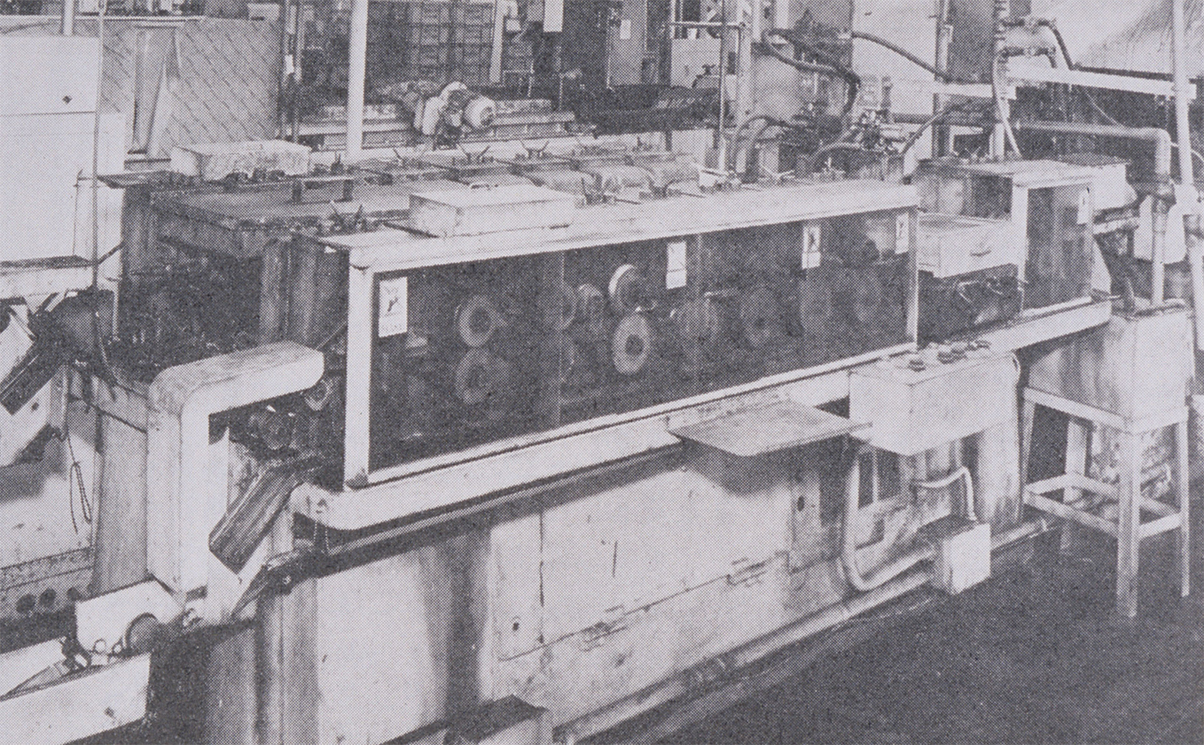
On December 8, 1941, the Pacific War began. As the war escalated, the automotive industry responded to military demands by ramping up the production of military vehicles. The electrical components and radiator divisions at the Kariya plant also experienced heightened activity. However, these divisions faced numerous challenges due to frequent relocations prompted by factory reorganizations. Despite these hardships, both divisions not only maintained their technical standards but also made continuous efforts to advance their technologies.
One notable example of these efforts was the implementation of production lines. The electrical components and radiator divisions adopted a conveyor system organized by product type. This approach allowed the entire process, from machinery operations to assembly, to be streamlined and consolidated into a single line for each product.
During this period, the divisions also began the production of specialized tools and dies necessary for mass production of electrical components. Initially, the focus was on creating general machine tools and dies, such as those for presses and milling machines, to support the increased production of electrical components. As time progressed, the divisions developed more advanced tools and machinery, including comprehensive armature slot punching dies, continuous tube manufacturing machines for radiators, and pipe drawing machines for aircraft coolers.