




Did you find this article helpful for what you want to achieve, learn, or to expand your possibilities? Share your feelings with our editorial team.

Jul 16, 2026
VISION & IDEAGiving Back Through Technology: 15 Years On, DENSO's LifeVision Returns to Tohoku
In the immediate aftermath of the 2011 Great East Japan Earthquake, a team arrived in Rikuzentakata with prototype digital tools and a mission: to reconnect residents scattered across temporary housing. But with reconstruction taking priority, the effort ended as nothing more than a proof of concept.
Fifteen years later, DENSO's ICT service LifeVision, now deployed in more than 90 municipalities across Japan, has returned to the Tohoku region in the form of a partial rollout in Fukushima Prefecture. Behind that journey was the resolve of a team that remained closely connected to people’s lives in the field.
Today, LifeVision's reach continues to grow across more than 90 municipalities nationwide. We gathered three of the people at the heart of that journey: Koichi Sugiyama, the business lead; Keisuke Toda, design lead; and Kazuharu Harada, development lead. They shared how they came to work on this service, what it means to them, and how they're thinking about creating even greater value going forward.
-

Community IT Service Business Dept., Automotive & Life Solutions Div.Koichi Sugiyama
Sugiyama joined DENSO in 1998 and spent his early career developing and refining gasoline engine injectors across design and production engineering. In 2012, he joined the LifeVision project and played a central role in bringing it to market in 2014. Since then, he has led the expansion of the business around key social challenges, including disaster preparedness and regional mobility. He now oversees the Regional IT Services Office.
-
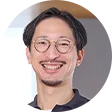
Design Dept.2, Design Div.Keisuke Toda
Toda joined DENSO in 2015 and worked on in-vehicle HMI (human-machine interface) design, including instrument clusters and head-up displays, building experience in interface design that bridges users and machines. He also worked on UI design for factory-floor applications, with a focus on usability from the worker's perspective. He now leads UI design for LifeVision and related systems, and is spearheading the rollout of a company-wide design system to raise overall UI quality.
-
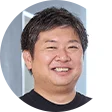
Community IT Service Business Dept., Automotive & Life Solutions Div.Kazuharu Harada
Harada joined DENSO as a mid-career hire in 2016, bringing a strong background as a system architect from a systems integrator, where he worked on large-scale infrastructure systems for major telecom clients. He applied that expertise to driving new feature development and strengthening LifeVision's technical foundation. He now serves as the development section manager, overseeing all development efforts.
Contents of this article
What Only an Outsider Can See: A Service Shaped in the Field
DENSO is best known for its automotive mobility technologies, including engine control systems, electrification components, and sensors.
But underlying all of it is a conviction about what truly matters to people. That spirit of inquiry extends well beyond the automotive world. On Driven Base, we've covered DENSO's work across AI, robotics, biosensors, data science, and more.
LifeVision delivers local community information and emergency alerts to residents, while giving municipalities a platform to offer digital services. We've covered its rollout and its significance previously, but the story of how a mobility supplier ended up building civic infrastructure begins with an internal entrepreneurship program in the early 2010s.
The program invited employees to pitch new business ideas directly to leadership. Sugiyama's team had a clear concern:
"Back then, Google and Apple were moving into autonomous driving and cloud services. But DENSO was still purely a hardware company. We felt we had to build a new business model around IT, even a small one, or we'd be left behind. That's what we took to the president."

Leadership didn't just greenlight the pitch as an internal exercise. They put real budget behind it and told the team to make something happen. To explore the possibilities, Sugiyama and his colleagues started traveling the country, investigating IoT applications and related business opportunities. What they found was an infrastructure landscape that had barely moved past the analog era: community notice boards and emergency broadcast systems still running on paper and loudspeakers.
The moment that crystallized everything came on Naoshima, a small island off the coast of Kagawa Prefecture. The team had gone there to work on an energy management pilot. At several points throughout each day, a speaker system broadcast local announcements into every home, and residents would stop whatever they were doing to listen and take notes.
"At three in the afternoon, everyone went quiet. The funeral notice was coming. The system could only store three recordings at a time, so if you missed it, it was gone. People kept notebooks to make sure they didn't miss anything. Seeing that, I knew immediately: this needed to be an app."
ーSugiyama

The island has a close-knit culture around communal mourning, where the whole community comes together for funerals and sees the departed off by boat. A funeral announcement wasn't just a notice. It was the kind of information people structured their day around. "Because we were outsiders," says Sugiyama, "we could see the inconvenience that residents had long stopped noticing."
Repeated encounters with these friction points in communities across Japan led to the creation of LifeVision, an ICT platform that delivers local information to residents via smartphones and tablets.
But the service has another origin story running alongside that one. In the weeks following the 2011 earthquake, the team traveled to Rikuzentakata to run a pilot project using digital tools to reconnect displaced residents in temporary housing. The city had more pressing priorities, and the effort never progressed beyond a trial.
“We were frustrated that we hadn’t been able to help. But that experience has continued to guide us from the very beginning.”
ーSugiyama
The desire to deliver, with today’s technology, what they had been unable to provide at the time—and to do so more effectively—ultimately brought them back to Fukushima 15 years later.
“What If I Break It?”: Design and Teamwork for Overcoming Fear
LifeVision officially launched in 2014, but for the first few years, adoption remained limited to just one or two municipalities a year. With few early implementation examples and skepticism from within the company, the hurdles to wider rollout were many.
"There were questions both inside and outside the company about why DENSO was doing this at all," Sugiyama recalls. His answer was to bring the doubters to the field. He took executives and colleagues to rural communities across Japan to hear from residents directly. In a remote mountain area of Akita Prefecture, an elderly resident told them she was afraid of bears. In a depopulated village in Tokushima, someone asked for more vending machines stocked with frozen meals that didn't require cooking. These weren't abstract market insights. They were real people, talking about their lives.
"Most DENSO employees in a B2B business rarely get to speak directly with end users. For the executives and staff who came along, hearing from people in the field was a genuinely new experience. It started to build a following inside the company."
Selling to municipalities proved harder still. Pilot programs were one thing. Committing to a system that would carry official communications was another. The psychological barrier was real. Sugiyama's approach was straightforward: demonstrate commitment over time. "We told them: DENSO isn't going anywhere. Please give us a chance.” Through such appeals, the team gradually built up its implementation track record one municipality at a time.

Once the number of implementations passed ten, LifeVision’s growing track record helped accelerate adoption. Then, around 2017, the introduction of national funding measures related to disaster preparedness gave that momentum an additional boost. During this period, the product and its services also continued to evolve in response to feedback from the field. One of the people behind that evolution was the design lead, Toda.
Drawn to industrial design, Toda joined DENSO and went on to design industrial drones and in-vehicle HMIs. At LifeVision, however, he found himself confronting a fundamental question: what does it really mean to create something that anyone can use?
"The user base isn't just elderly residents. There are plenty of people in their thirties and forties with children, too. I've seen people in their sixties playing puzzle games on iPads during the commuter bus. The range of digital literacy is much wider than you'd expect. Designing for all of them is something I've been working through ever since."
The answer he arrived at was structural: make the information architecture immediately legible to anyone. Many public-sector apps accumulate features and grow cluttered. LifeVision puts information delivery front and center on the home screen, with services like electronic applications organized into a separate tab. The layout is clean, but it leaves room for each municipality to customize with its own mascot character and color palette, so the app feels like it belongs to the community rather than to the platform.

The product concept is "residents and towns, set in motion." Alongside delivering information tailored to individual resident needs, the design consciously reduces the operational burden on municipal staff, so that consistent outreach becomes sustainable. That means simplifying and clarifying every operator-facing screen, and incorporating feedback from everyone involved with LifeVision, from end users and app developers to the sales team, in pursuit of an interface that is clear and intuitive for all of them.
“You can never fully put yourself in someone else’s shoes unless you hear directly from them.”
ーToda

The Service Includes Making It Work in Practice
Holding the product together from the inside is the development lead, Harada. He came from a systems integrator background where the job was to build what the client specified, precisely and reliably. He wanted to be closer to the business itself, which brought him to DENSO.
When Harada joined, LifeVision had been deployed in just two municipalities, and the smartphone app was still under development. From the beginning, he made a point of going into the field and watching people use it. What he saw was that many elderly users approached a touchscreen with genuine apprehension, saying things like "What if I break something?" or "What if the screen goes wrong and I can't fix it?"
Even the basic touch gesture, not pressing down but making light contact and releasing, wasn't obvious to everyone. So Harada's team built a simple number-tapping game and used it at community demonstration sessions, giving people a low-stakes way to get the feel of the interface before ever opening the app.

These steady, behind-the-scenes efforts have shaped the core of a product that may be easy to imitate on the surface, but not in substance. Fine-tuned controls that prevent accidental responses to long presses, a UI that can be operated entirely through taps, and disaster-response features honed through feedback from the field all reflect design choices that could only have emerged through dialogue with people in the field.
"At demo sessions, we'd put stickers on the tablet showing where the power button and charging port were, so we could walk people through the physical device more clearly. We think of the whole experience, right through to actually being able to use it day-to-day, as part of the service."
ーHarada

The Fukushima deployment marked a new stage for LifeVision, operating at the prefecture level for the first time, and raised the technical stakes considerably.
Designing a system that would serve all 59 municipalities in the prefecture simultaneously demanded far more rigorous thinking around automatic failure recovery and tiered access controls. The layered permission architecture developed for that project has since become the foundation for more flexible deployments across regional coalitions and shared municipal systems.
From Prefecture to Nation: Data Opens a New Chapter for LifeVision
The Fukushima rollout represents more than geographic expansion. Building a system that could aggregate the needs of 59 municipalities and address the full hierarchy from prefecture to town to individual resident opened up new possibilities for what LifeVision can become.
Sugiyama is already thinking beyond the information infrastructure layer. His vision is to take the user touchpoints that LifeVision creates and combine them with regional open data, opening pathways to more expansive business opportunities down the line.
"For example, mobility data, understanding how residents move around a community, will eventually feed directly into autonomous mobility service design. And we think the key to scaling this business is building a platform that can bring in private-sector partners, not just public services."
The team's ambitions extend to how the organization itself develops. Harada sees talent development as the next frontier, cultivating people who understand the technology well enough to drive the business forward, particularly in sales and deployment support. His view is that having technically grounded people across those functions, not just in engineering, is what will allow the business to keep growing.
Toda is focused on what LifeVision can become as an app. He wants it to move past its image as a disaster-preparedness tool for elderly users and become something younger generations open as part of their daily routine. "The goal is to create a service that, because it is seamlessly woven into everyday life, can also be relied on in an emergency."
What quietly runs through the words of all three is a sense of pride in being directly engaged with social challenges. The service, born from the frustration of not having been able to help in Rikuzentakata, has spent the past 15 years building more than technology alone. By listening to voices from the field and learning from failure, it has grown alongside local communities—earning trust not only in the product itself, but also in the people behind it.
The return to Fukushima isn't a destination. It's the beginning of a new chapter in how technology and local life can grow together.

COMMENT


Changing your "Can'ts" into "Cans"
Where Knowledge and People Gather.
