
QRcode® invented by DENSO
TV Broadcast Information
“The QR Code: Birth of a Global Standard” will be broadcast worldwide in English
on NHK WORLD-JAPAN as part of “Project X: Unsung Heroes.”
The program will also be available on demand after the broadcast.
On Air Schedule (JST)
・ May 31, 2026 10:10 - 10:57 / 16:10 - 16:57 / 22:10 - 22:57
・ June 1, 2026 04:10 - 04:57

About QR Code®
An Innovation from Japan’s Automotive Industry
Bringing Happiness to the World
The QR code was invented by DENSO in 1994 in response to a simple question from the gemba (factories/production lines) : “Can we handle product information more efficiently?” The answer was a technology capable of storing large amounts of data, enabling high-speed scanning, and withstanding dirt—the result turned out that productivity was dramatically improved by QR code.
Driven by a desire to spread QR code and make them beneficial to society, DENSO advanced international standardization and made the technology open source.
Today, QR code are seamlessly woven into our everyday lives throughout the globe—boosting productivity across industries, enabling secure payments, enhancing safety at train station by applying QR code to platform doors, and delivering convenience to people everywhere.

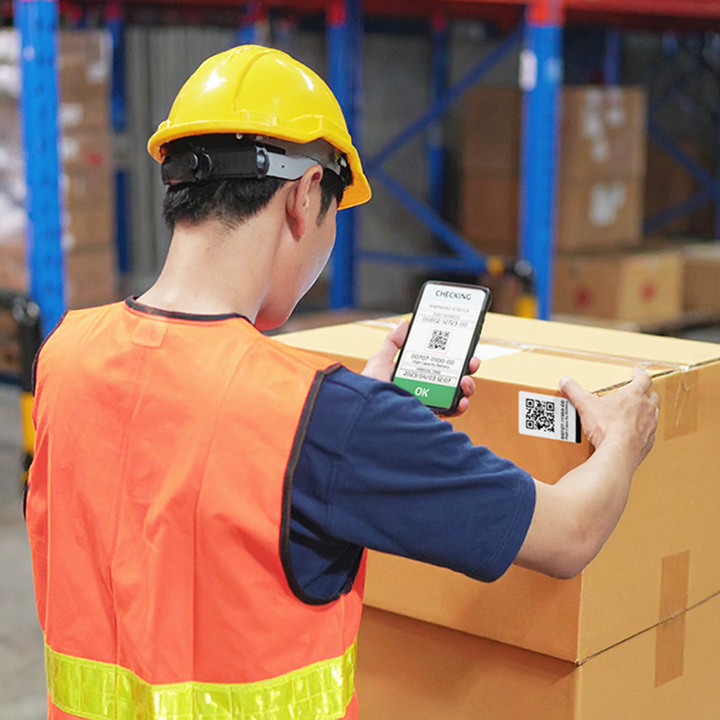

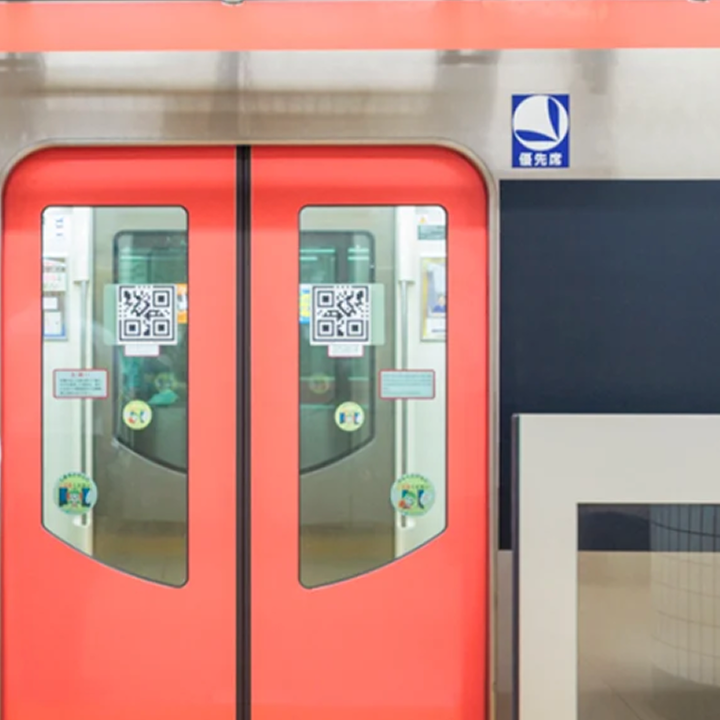

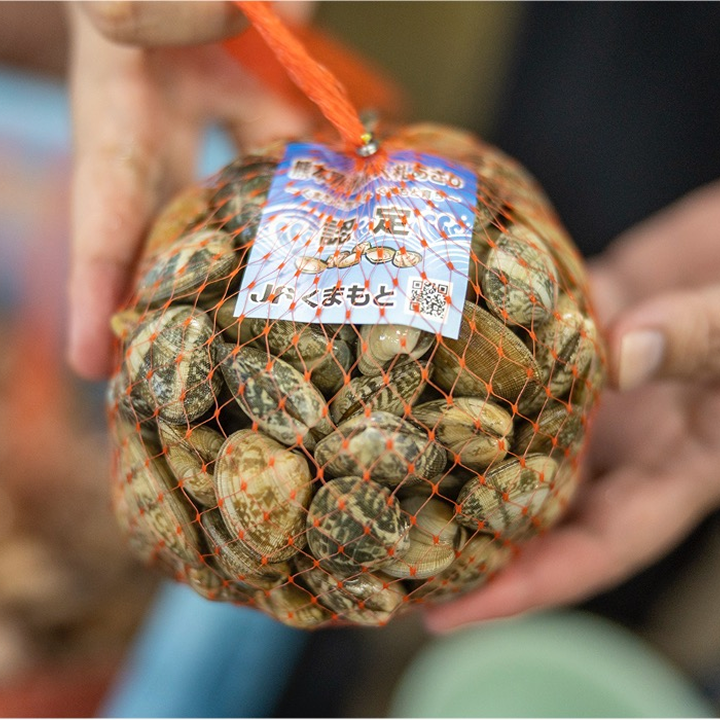
The DENSO QR Code® Technology That Changed the World
The Road to the QR Code®

The automatic identification technology behind the Toyota Production System
The origins of the QR Code® date back to the 1970s. At the time, DENSO was looking for a more accurate and efficient way to manage the information on the kanban cards that support the Toyota Production System.
The technology that caught DENSO's attention was the barcode. To build a system that could hold up to long-term use in manufacturing environments and let machines read information quickly and accurately, DENSO developed its own barcode, the ND Code, along with a dedicated scanner. Developing everything in-house—from the code itself to the scanner and the information processing behind it—was a strength unique to DENSO, rooted in its deep understanding of the challenges on the plant floor.
As these technologies spread into the automotive, retail, and other industries, DENSO kept advancing its automatic identification technology by improving scanning speed and accuracy, making scanners smaller, and developing optical character recognition (OCR). This accumulated expertise laid the foundation for the major challenge to come.
The Origins of the QR Code® Lie on the Production Floor

New challenges for the kanban system
Since the 1980s, as automotive customer needs became increasingly diverse, manufacturing sites were required to support a growing variety of vehicle models and specifications. By the early 1990s, the amount of information handled on kanban cards and transaction documents had increased, and the ND Code then in use could no longer accommodate all the information that needed to be recorded. Moreover, because the ND Code had not been internationally standardized, it was difficult to use at overseas production sites.
Storing more information was only part of the challenge. The new code had to pack more data into a limited space yet still read instantly in a single scan. It had to be readable on parts moving down the production line, hold up against oil and grime, and scan accurately even when marked directly onto a product. The shop floor demanded both efficiency and quality.
Having spent years developing the ND Code and its scanners—and honing its automatic identification technology across the automotive, retail, and other industries—DENSO understood these challenges deeply.
A Development Process Built on Meticulous Manual Work

Refining scanning performance to meet the needs of the shop floor
In developing the new code, the team paid special attention to the markers that let scanners locate the code instantly. Earlier two-dimensional codes had used similar basic ideas, but the question remained: what shape and arrangement would make fast, reliable scanning possible on the shop floor? Through extensive testing, the team searched for a ratio unlikely to be mistaken for patterns in printed materials, along with the best placement within the code itself.
Painstaking research and repeated trial and error by hand brought the team closer, step by step, to a code that would truly work on the shop floor.
Why the QR Code® Became Widespread Around the World

Making outstanding performance available to everyone
The QR Code® spread around the world not simply because it could store large amounts of information, but because it delivered the performance manufacturing sites needed: fast, accurate, and reliable scanning, along with high capacity and strong resistance to dirt.
Drawing on an earlier experience in which the ND Code wasn't adopted at an overseas plant, the development team set out from the very start to make the QR Code® a technology that could be used anywhere in the world. With international standardization in mind, the team worked to meet the necessary requirements, including placing the relevant technologies in the public domain. This created an environment in which companies and developers could easily adopt the code, and it soon spread across the automotive, logistics, and many other industries.
The QR Code® ultimately moved beyond industrial applications into mobile phones, smartphones, and countless other technologies, growing into a technology that supports everyday life around the world.
The Road to Standardization
October 1996:AIM Japan (Association for Automatic Identification and Mobility Japan:Currently JAISA) Standard
October 1997:AIM International (Association for Automatic Identification and Mobility International) standard (ISS-QR code)
March 1998:JEIDA (The Japan Electronic Industry Development Association) standard (JEIDA-55)
January 1999:JIS standard (JIS X 0510)
June 2000:ISO standard (ISO/IEC18004)
2000:American Automobile Association standardized
2000:IEC (International Electrotechnical Commission) standard
December 2000:The China national Standard
May 2002:The Korea Industrial Standard
August 2003:Vietnamese National Standard
December 2011:GS1, an international distribution system standardization organization, has adopted QR code as the standard for mobile devices.
The QR Code’s
Three
Features and
Five
Secrets

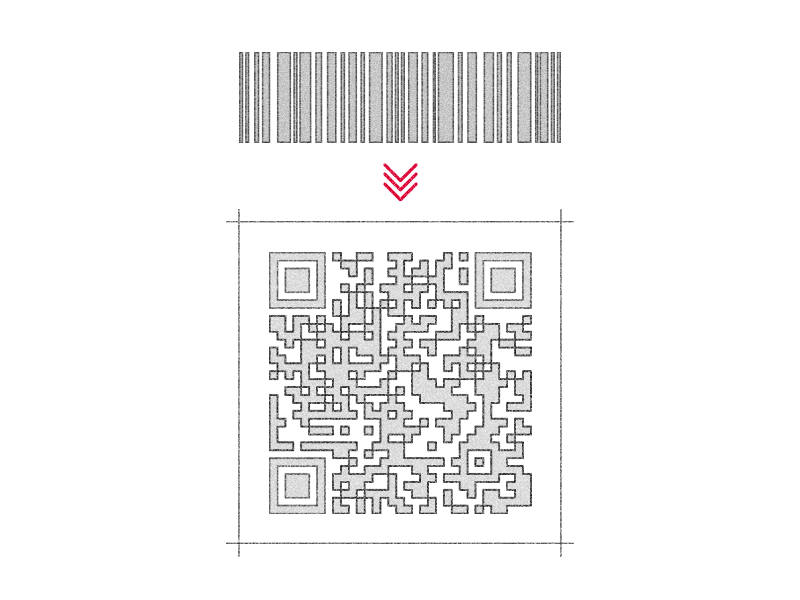
From Barcodes to the QR Code®
Prior to the development of the QR code, plants used barcodes to facilitate production control. However, the limited amounts of information that could be encoded, the effort required to scan them, and other problems demanded a solution. The QR code was developed to solve these problems.
The QR Code’s Three Convenient Features
-

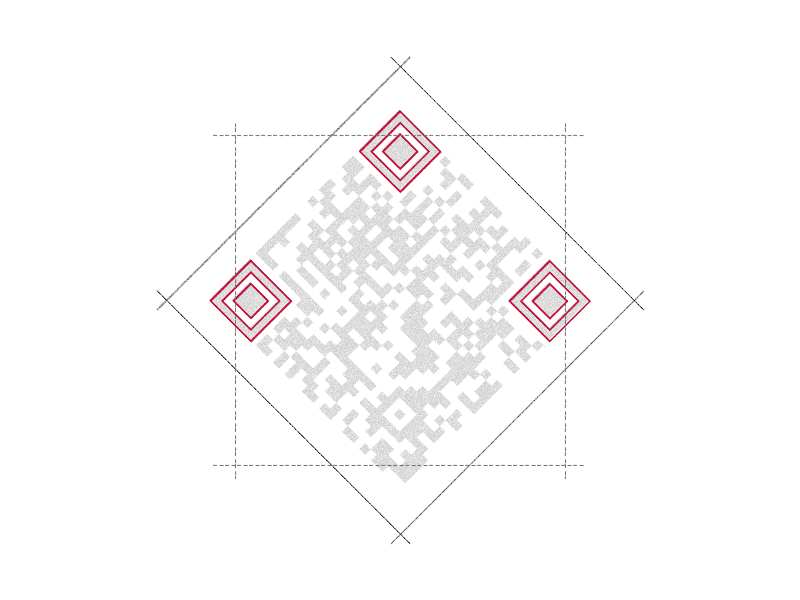
Enabling rapid scanning from any direction in 360 degrees
Barcodes can only be encoded with a small amount of information, meaningmultiple barcodes were required to handle large amounts of data. QR code can handle hundreds of times more information than barcodes, making production control with a single QR code a possibility.
-

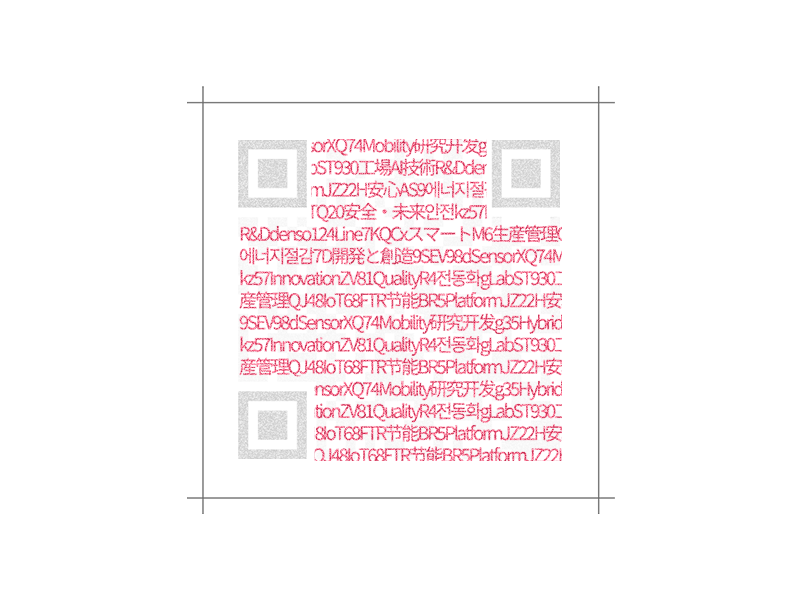
Encoding large amounts of data
Barcodes require strict conditions in order to be scanned, and at production sites where products of various sizes and shapes are handled, the time needed to scan these barcodes was an issue. QR code, on the other hand, can be rapidly scanned from any direction in 360 degrees, improving operational efficiency.
-

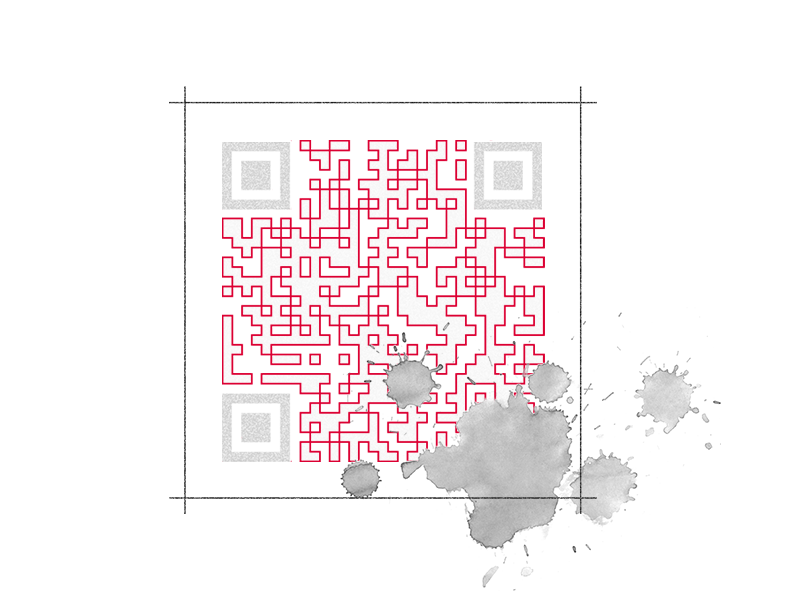
Resistant to dirt and damage
Barcodes sometimes became impossible to scan at plants due to dirt or damage caused by oil and other factors. This was a problem. In contrast, with QR code, data can be restored even if some parts of the code become dirty or damaged. This improved scanning accuracy.
Five Secrets Hidden in the QR Code®
QR code patterns, now woven into daily life, all carry meaningful design.
Here, we will break down the QR code and examine the technology that goes into each element.
-
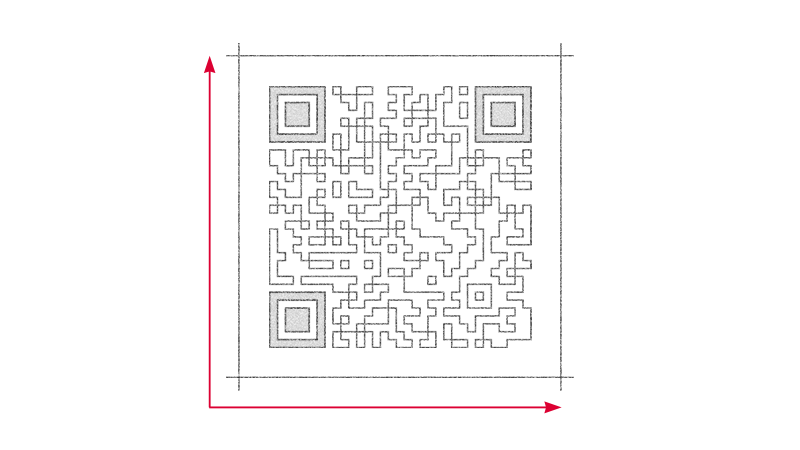
01.
Information can be encoded both horizontally and vertically
While barcodes can only be encoded with information in one direction, 2D codes can be encoded with information both horizontally and vertically. This has dramatically increased the amount of information that can be recorded.
-
02.
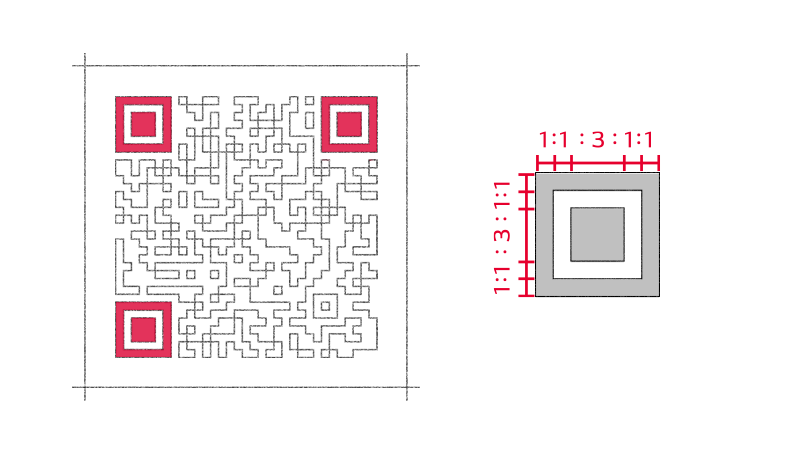
Three position markers quickly identify QR Code®
The three corner position markers identify the pattern as a QR code. Designed to be scanned from any direction, the unique 1:1:3:1:1 ratio makes it possible to distinguish the code from other printed matter.
-
03.
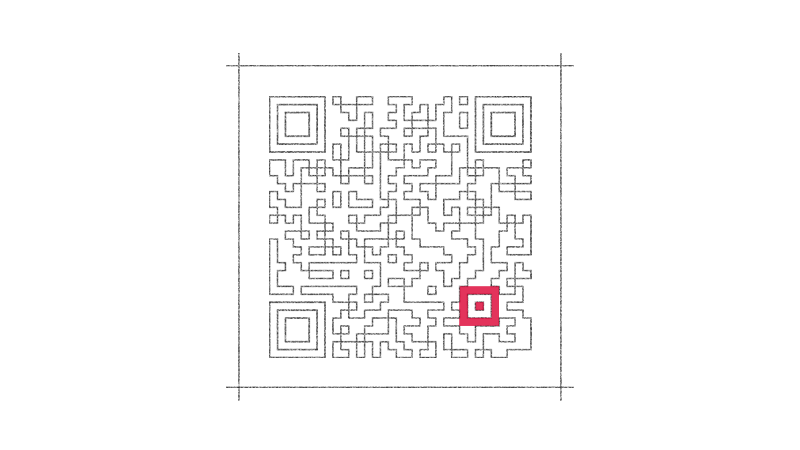
Alignment pattern for correction
The small square found in the lower right corrects position and angle deviations caused by distortion. This is important when scanning large QR code or QR code printed on curved surfaces.
-
04.
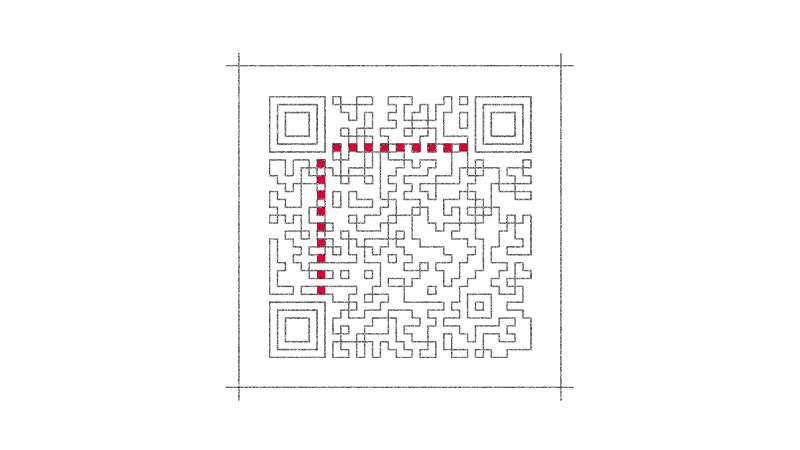
Timing pattern to identify the center
The two alternating black and white straight lines between the three corner position markers are used to identify the center of the QR code. They are used to correct the center if the position markers become distorted or there is an error in the spacing of the squares.
-
05.
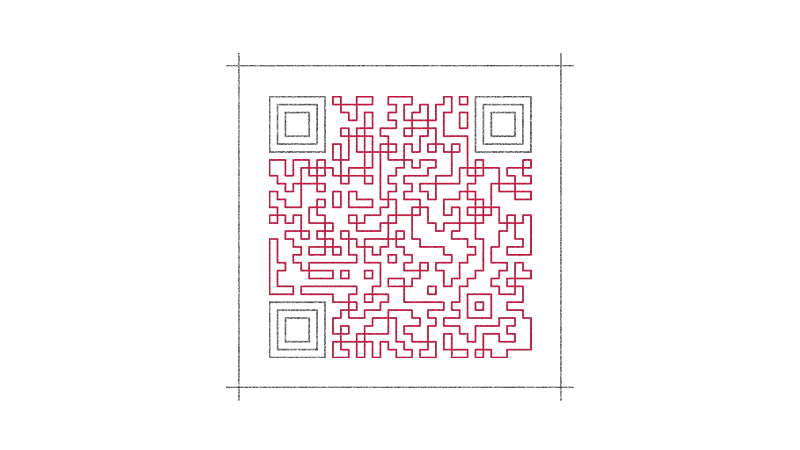
Data encoded in a QR code and an error correction function in case of dirt or damage
The data stored in a QR code occupies most of the codeʼs area. However, even if a portion of the QR code is dirty or damaged, the data contains an error correction function that allows the data to be restored. This function makes it possible to read the information correctly even in the case of some dirt or damage.


Thanks to these features and technologies, QR Code® are now used all over the world.

Discover and Enjoy More About QR Code®

Denmaru QR Code Maker
A collaboration between DENSO—the inventor of the QR code—and Denmaru, allowing you to create your own original QR code.

Dedicated Website for the 30th Anniversary of the QR Code
A dedicated site celebrating 30 years since the QR code’s creation, tracing its journey from the past, to the present, and into the future.
The Story Behind QR Code® Technology Development


QR Code® Solutions

Facial Authentication SQRC
An application that converts facial data into a QR code and compares it with live images captured by a camera, enabling simpler and more precise identity verification.
Because authentication works offline without an internet connection, there is no need for server installation or maintenance costs. Its serverless design also helps reduce the risk of data leaks.

On-Site Operations Improvement Solution
A system that visualizes production processes and worker performance in factories and other work environments—making it easier to analyze current conditions and streamline performance management through data. By simply scanning a QR code at the start and end of each task, workers can log their performance without complex procedures, reducing their workload while ensuring seamless data collection.

Platform Door Control System (Jointly developed with the Tokyo Metropolitan Bureau of Transportation)
A system that controls platform doors by scanning a QR code affixed to the train doors with readers installed at the station.
Specially developed QR code resistant to dirt and damage ensure stable operation despite sunlight and environmental changes. With only minimal train modifications required, costs are reduced, and installation is expected to expand—particularly on lines shared by multiple railway operators.
Major QR Code® Awards
| November 2001 | DENSO WAVE and TOYOTA CENTRAL R&D LABS receive the Governor of Aichi Prefecture Award of the Chubu region Invention Award of Japan Institute of Invention and Innovation for QR code. |
|---|---|
| June 2014 | DENSO WAVE and TOYOTA CENTRAL R&D LABS receive European Inventor Award/Popular Prize of European Patent Office. |
| June 2016 | Japan Institute of Invention and Innovation select QR code one of the One Hundred Innovation after the war in Japan. |
| January 2020 | DENSO WAVE receives Japan Techno-Economics Society Prime Minister Award of The Technology Management & Innovation Awards for QR code. |
| March 2020 | DENSO WAVE receives The Ichimura Prize in Industry of Ichimura Foundation for New Technology for Outstanding Achievement for The development and Evolution of Two-dimensional Codes. |
| October 2020 | DENSO and DENSO WAVE are certified as an Institute of Electrical and Electronics Engineers (IEEE) milestone. |
| October 2021 | DENSO and DENSO WAVE receives Japan Institute of Design Promotion GOOD DESIGN LONG LIFE DESIGN AWARD for QR code. |
| December 2022 | DENSO receives Institute of Electrical and Electronics Engineers (IEEE) Corporate Innovation Awards for Developing and Spreading Use of QR code. |
| November 2024 | DENSO WAVE and Bureau of Transportation Tokyo Metropolitan Government receive Patent Office Commissioner Award of the Chubu region Invention Award of Japan Institute of Invention and Innovation for the Control System for Platform edge doors. |
| July 2025 | DENSO WAVE and Bureau of Transportation Tokyo Metropolitan Government receive All Japan Invention Award of Japan Institute of Invention and Innovation for the Control System for Platform edge doors. |