1. Consolidated Management
1997-
(1) The First Future-Oriented Vision
- 1997
- In 1997, President Hiromu Okabe announced “DENSO VISION 2005.” This vision outlined the future direction DENSO aimed to pursue after overcoming the collapse of the economic bubble, boldly declaring a challenge to achieve “world-best management.”
The company's thorough efforts to strengthen its structure in response to the economic downturn had paid off, allowing DENSO to navigate through the “bubble burst.” In the fiscal year 1996, the company achieved a recovery in sales and a significant increase in profits. It was time to set a new compass for the next leap forward.
The late 1990s saw intensifying global competition. The establishment of the World Trade Organization (WTO) promoted international trade cooperation, and corporate activities became more globalized. Domestically, a new concept of “corporate social responsibility” emerged, and awareness of environmental protection increased.
It was also a time when the social role of companies began to change significantly. It was crucial to fully consider this increasingly complex management environment. Recognizing this need, the company embarked on formulating a new set of DENSO Principles.
President Okabe had a strong conviction. For this new set of DENSO Principles, he wanted to clearly present to employees “the vision DENSO aims for,” which would show what the company should become in ten years, rather than simply listing important company policies.
- Deep DiveInstilling “Soul” into the New DENSO Principles
- President Okabe was particularly committed to ensuring that the new Principles (or vision) had genuine effectiveness by “instilling soul” into them. By “instilling soul,” he meant creating a state where every employee could discuss the guidelines in their own words. To achieve this, it was first necessary for the executives to take the lead and visibly demonstrate their genuine commitment to the Principles.
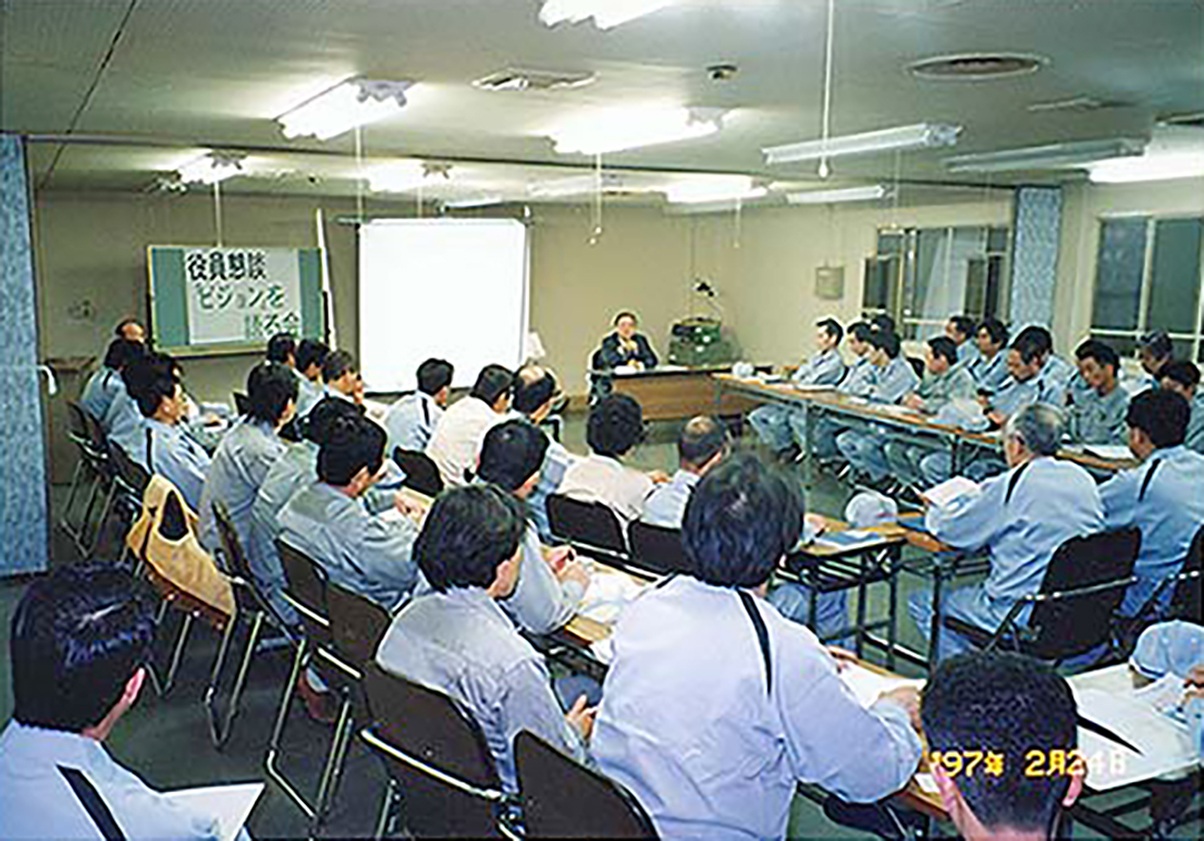
In June 1996, President Okabe convened all executives and held an Executive Discussion Session. The executives were divided into five groups based on key functions such as sales, technology, and production. They engaged in intensive discussions on what should be incorporated into the new Principles, thereby solidifying the core structure of the new vision.

This vision of “the DENSO we aspire to be” had to be something more concrete and imaginable than the conventional numerical targets like sales and profits. Without this clarity, it would not resonate with the employees. It was essential to share a clear future image of the company with the employees to genuinely engage them in implementing the policies and strategies to achieve it. Having been deeply involved in the company’s strategic planning since his early days as a young employee, President Okabe held this belief firmly.
While previous DENSO Principles were focused on addressing immediate challenges, President Okabe envisioned the new DENSO Principles to be future-oriented and growth-driven. Therefore, the term “Principles” was replaced with “Vision,” emphasizing a focus on the future.
In June 1997, President Okabe announced “DENSO VISION 2005.”
Reference:Overview of DENSO VISION 2005
Reference:The Vision of DENSO VISION 2005
- Deep DiveThe Six Concepts of the Vision
- In formulating and articulating the contents of DENSO VISION 2005, six key concepts were emphasized:
Growth: Focusing on business expansion and the creation of new value.
People: Respecting the humanity of individuals as members of the organization.
Dreams and Possibilities: Energizing employees and enabling them to realize their potential.
Compass: Providing a clear direction for management.
Transformation: Strengthening the business structure.
Social Responsibility: Contributing to society and fostering international coexistence.
Among these, President Okabe placed particular emphasis on “Growth” and “People” as the foundational elements for the company.
The message conveyed through this vision was that the company would evolve into a “Company of Possibilities that Resonates with Society” in the 21st century. To this end, the slogan “DENSO: Opening the Door of Possibilities for Society, Customers, and Employees” was adopted. This encapsulated the aspiration to become a company that could make seemingly impossible things possible, turning dreams into reality.
Furthermore, this vision declared the company's commitment to practicing “world-best management” as a slogan, aiming to achieve the highest standards in management globally. While DENSO had always prided itself on having world-best products and technologies, this vision explicitly stated the company's ambition to also achieve the highest level in management practices.
- Deep DiveWhy “World-Best Management”?
- During the announcement of the vision, President Okabe elaborated on the slogan “world-best management” as follows:
"The world is becoming increasingly globalized due to advancements in information technology and transportation, moving towards a single market. To ensure the smooth functioning of this single market, competition rules are becoming standardized globally. For Denso to survive in such a world market, it is essential to become an irreplaceable entity—one that society, customers, and employees can confidently believe in, thinking ‘If it’s Denso, it can be done' or ‘Only Denso can do this.’
To achieve this, we must actively adopt global standards, which are the prerequisites for competition. At the same time, we need to implement strategies that highlight Denso's unique strengths, enhance our competitive capabilities, and foster a corporate culture that values social responsibility. Only by doing so can we practice management at the highest global standards."