6. Learning from the Great East Japan Earthquake
1997-
(1) DENSO's Unique Approach to Reconstruction Support
- 2011
- The Great East Japan Earthquake struck, causing extensive damage. DENSO resolved to undertake recovery and reconstruction support with the collective effort of the entire group. This approach was distinctly DENSO, providing invaluable learning opportunities for the employees involved.
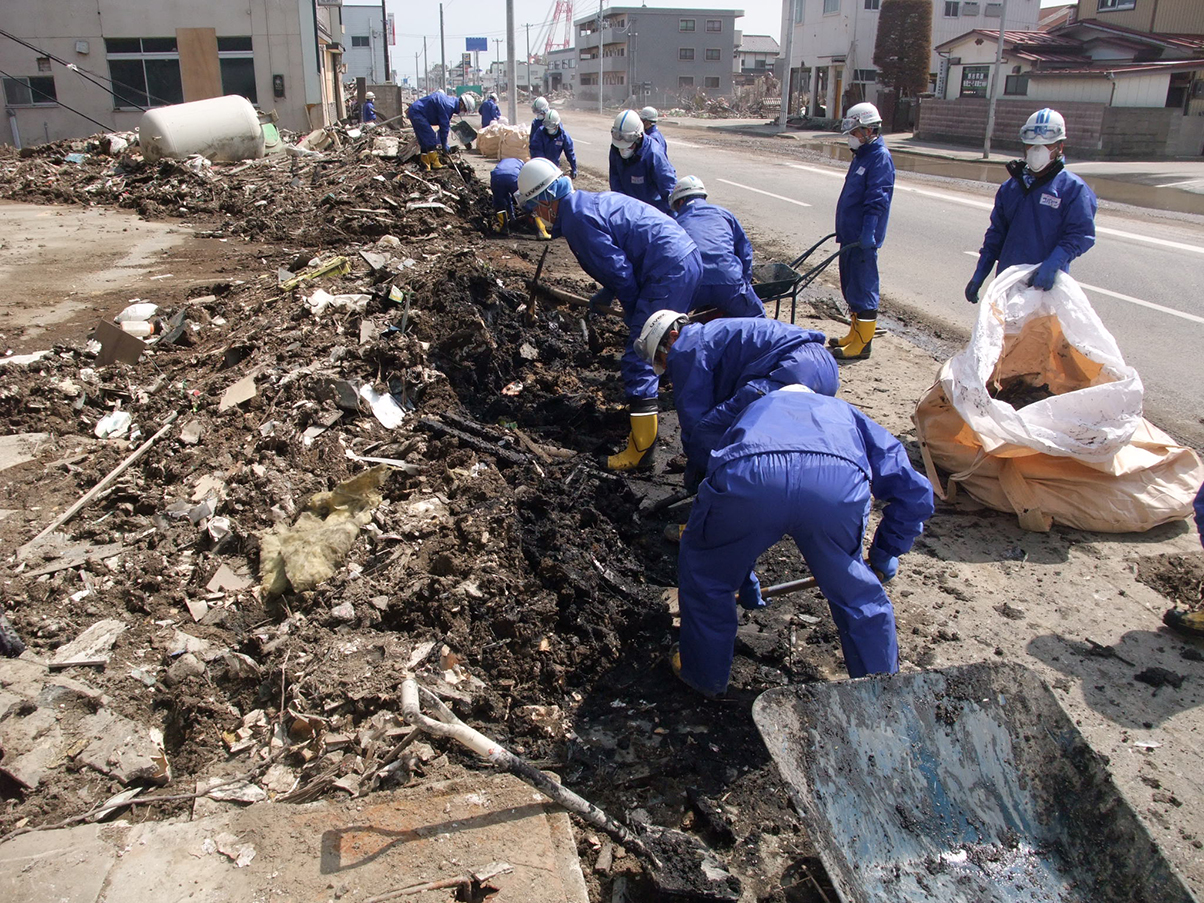
On March 11, 2011, a magnitude 9.0 earthquake struck off the coast of Sanriku, resulting in a disaster with over 20,000 dead or missing. While all DENSO employees were confirmed safe, some buildings of group companies in the Tohoku and Kanto regions were partially damaged. Damage to over 600 supplier factories was also confirmed.
President Nobuaki Kato visited the disaster area in late March and witnessed the severity of the devastation firsthand. He resolved that “This is a national crisis, and DENSO will engage in recovery and reconstruction support with the entire group.” This policy was immediately communicated company-wide.
In response, various departments mobilized to call for donations and relief supplies, support the recovery of affected suppliers, prepare for vehicle repairs and power supply in the disaster area, and manage personnel allocation due to reduced production.
However, many employees expressed a desire to personally contribute to the disaster area but felt constrained by the lack of information and direction. To address this, the company proposed that instead of volunteering individually, employees could participate in recovery and reconstruction support activities as part of their work. This allowed for continuous deployment of personnel, with the company handling transportation, accommodation, and supplies, reducing the burden on participating employees. This proposal was widely supported and seen as embodying the “DENSO spirit.”
Many employees volunteered, and the plan was quickly put into action. Ishinomaki City in Miyagi Prefecture, which suffered significant human casualties, was chosen as the support site. In April, the first group of 30 employees was dispatched. Between April and August, a total of 674 employees participated over 16 deployments, contributing to the recovery efforts for 74 days.
- Deep DiveTemporary Provision of Buildings (Emergency Shelters)
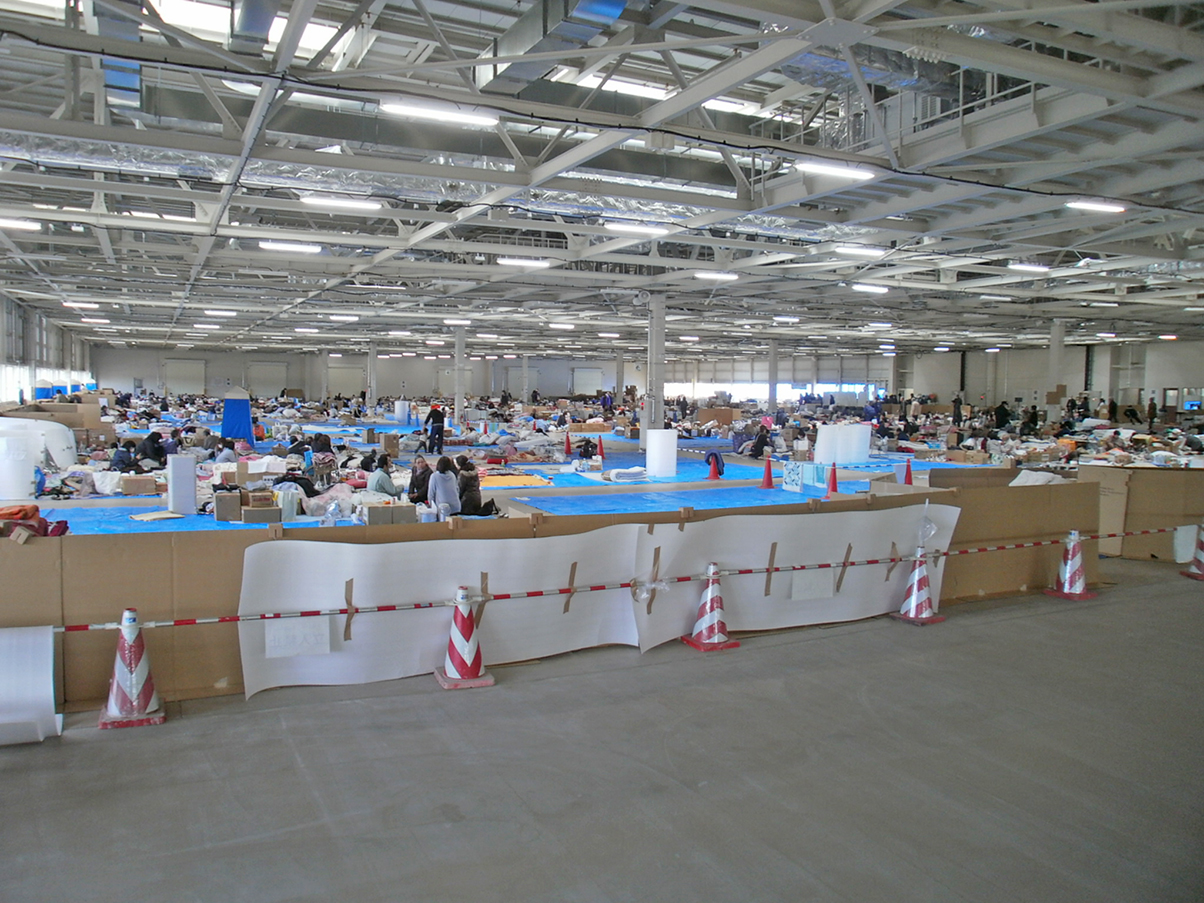
- In response to the Great East Japan Earthquake, DENSO provided local buildings as emergency shelters for those affected by the disaster. In Tamura City, Fukushima Prefecture, “DENSO East Japan” (now “DENSO Fukushima”) had just completed the construction of a new facility intended for car air conditioner production, with the building scheduled for handover in a week. The earthquake struck before the production equipment was installed, sparing the building from significant damage.
The following day, a hydrogen explosion occurred at the Tokyo Electric Power Company's Fukushima Daiichi Nuclear Power Plant Unit 1, prompting evacuation orders for hundreds of thousands of residents. Upon request, DENSO temporarily offered the DENSO East Japan building as an emergency shelter. A relief team was immediately dispatched to the site to prepare for the influx of evacuees. Given the harsh winter conditions, the team quickly laid down insulation materials on the floors and established a medical room and a communication headquarters. These efforts enabled the facility to accommodate approximately 2,000 people, providing them with a safe refuge during a critical time.
- Deep DiveTemporary Provision of Buildings (Fujikura Rubber)
- After approximately one month of sheltering evacuees in the DENSO East Japan (now “DENSO Fukushima”) building, the residents gradually moved to other designated shelters. Subsequently, a new request was received from Fujikura Rubber Industry(Fujikura Composites), a supplier whose factory was located within the evacuation zone of the nuclear accident, with no prospects of resuming operations.
At that time, parts manufacturers in the disaster-affected areas were unable to produce, leading to reduced production across the entire automotive industry. DENSO accepted this request and lent the building to Fujikura Rubber Industry(Fujikura Composites) for about six months, enabling them to continue their operations during this challenging period.
DENSO's support extended beyond immediate recovery. President Kato emphasized the importance of continuous support, particularly through economic contributions by creating local employment. “DENSO East Japan” (now “DENSO Fukushima”), which started operations shortly after the disaster, expanded its production of car air conditioners and engine parts. In 2012, “DENSO Iwate” was established in Iwate Prefecture, launching the production of automotive semiconductors and other products. Since then, DENSO has expanded its economic contributions through business activities not only in the disaster-affected areas but throughout the Tohoku region.
The experiences gained from the support activities during the Great East Japan Earthquake were also effectively utilized in subsequent natural disasters, such as the floods in Thailand. Additionally, these activities heightened awareness of business continuity during emergencies and risk management during normal times.
- Deep DiveSpeed of Initial Response
- Through DENSO's recovery and reconstruction support activities on-site, the company received gratitude from both local authorities and residents primarily for the speed of its initial response. This rapid action was made possible by DENSO's approach of having headquarters make swift decisions on basic policies while delegating the actual activities to local teams.
Additionally, the importance of DENSO's long-standing commitment to “genchi genbutsu” (going to the source to see the actual situation for oneself) for accurate and swift information gathering was once again recognized.
Through these recovery and reconstruction support activities, DENSO re-recognized the vastness and interconnectedness of the automotive industry and the significant social responsibility that DENSO bears within it.