3. Establishment of Manufacturing Practices
1971-
(6) 100% Quality Control
- 1973
- Starting from the mid-1960s, quality demands from the market became significantly stricter, to the point where defective products were no longer tolerated at all. In response, our company launched the “100% Good Products” campaign in 1973, initiating our “TQC (Total Quality Control) activities.”
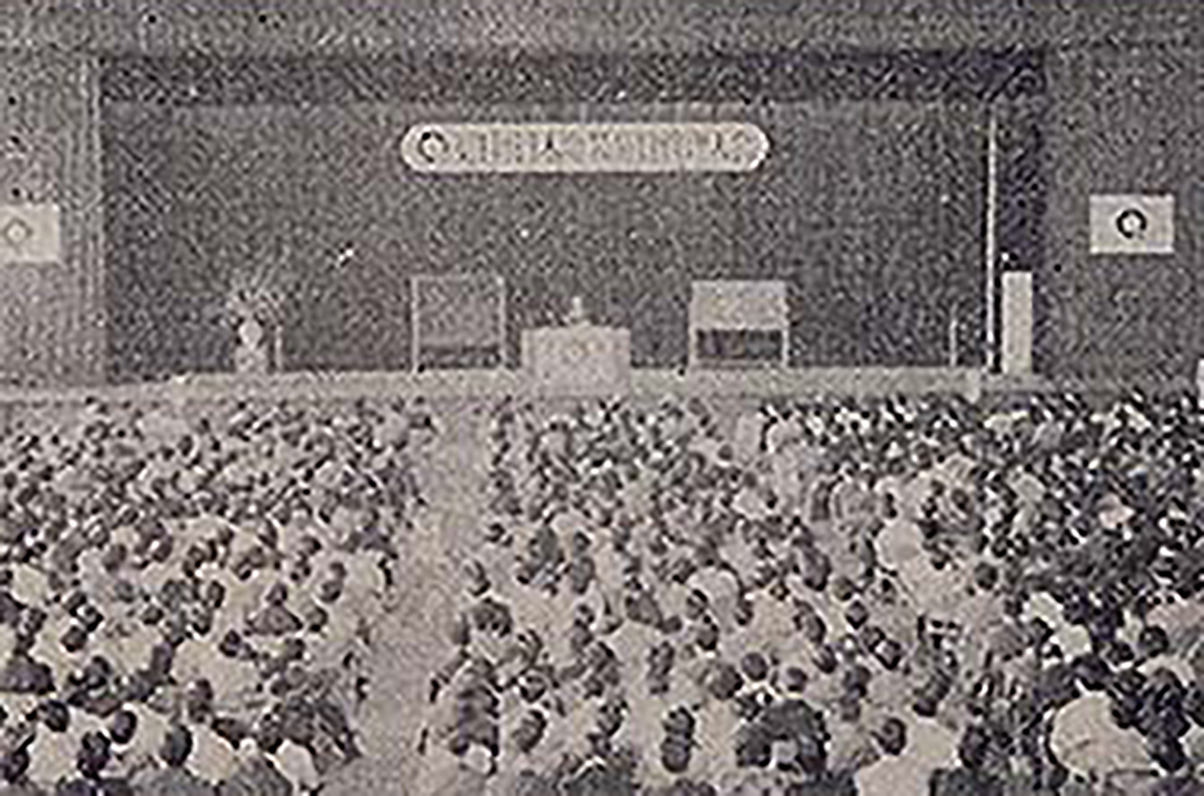
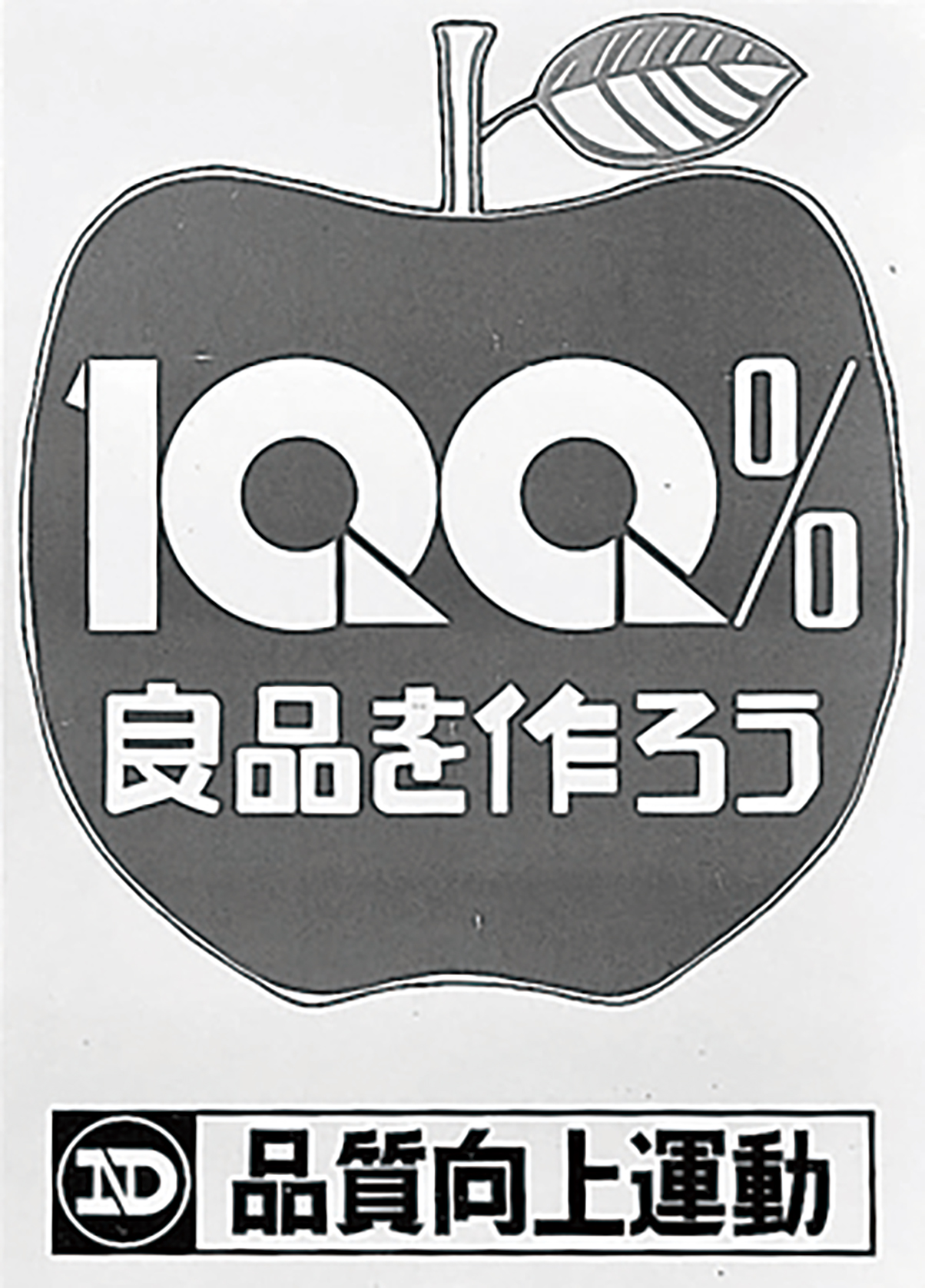
Quality has always been a crucial theme for us, and we have emphasized quality-focused management since our founding. We have continuously dedicated efforts to our quality assurance system and QC (Quality Control) activities based on the principle of quality first.
Our quality control activities entered a new phase with the launch of the “100% Good Products” campaign in 1973. This was in response to the increasingly diverse and sophisticated quality demands from the market since the mid-1960s. The introduction of the recall system and the stronger legal enforcement of manufacturer responsibilities also contributed to this shift. The traditional focus on “defective rate” was no longer sufficient to meet the stringent market demands. Products shipped had to be “100% good products,” with no defects allowed.
Therefore, we adopted “100% Good Products” as our slogan and initiated a new quality improvement movement. Around 1965, comprehensive company-wide quality control activities in Japan came to be known as “TQC (Total Quality Control) activities.” The “100% Good Products” campaign aimed to enhance product reliability and involved all company departments, including sales, administration, engineering, manufacturing, and quality assurance. It encompassed all levels of employees, from top management to general staff, embodying the essence of TQC activities.
Phases of the “100% Good Products” Campaign
First Phase (1973-1976)
The initial phase aimed to thoroughly instill the “100% Good Products” philosophy throughout the company.
Second Phase (1977-1979)
The focus shifted towards ensuring product reliability. These activities helped establish a solid foundation for company-wide quality control.
Third Phase (1980-1982)
- Deep DiveOverview of the First Phases of the Campaign
- First Phase (1973-1976)
Objective:
- Thoroughly instill the “100% Good Products” philosophy within the company.
- Focus on reducing the absolute number of defects and completely eliminating significant quality issues.
Key Targets:
- Significant reduction in the number of market complaints.
- Substantial decrease in the number of defective products returned by customers.
- Major reduction in the number of registered critical quality problems.
- Deep DiveOverview of the Second Phases of the Campaign
- Second Phase (1977-1979)
Context:
- In a low-growth economy, the lifespan of automobiles extended, increasing the demand for longer product lifespans.
Objective:
- Emphasize activities aimed at thorough reliability improvement and routine quality assurance, particularly focusing on eliminating initial failures.
Key Targets:
- Continued efforts to significantly reduce market complaints.
- Further substantial decrease in the number of defective products returned by customers.
Ongoing major reduction in the number of registered critical quality problems.
- Deep DiveOverview of the Third Phases of the Campaign
- Third Phase (1980-1982)
Context:
- By the end of the second phase, the foundation for company-wide quality control had been established, and the initial goals were achieved.
Objective:
- Aim to enhance the overall management standards of the entire Denso Group, including subsidiary companies.
- Based on the principle of source control, strive to realize highly reliable products that surpass those of other companies.
Key Activities:
External experts provided guidance on important projects, focusing on the development process based on the philosophy of source control.
Entering the 1980s, the era of intense international competition began, and market demands for quality became even higher. The achievements of the first and second phases were no longer sufficient. Thus, the third phase was initiated, aiming to enhance overall management standards, including group companies, to compete with new products and technologies in the international market.
Over the nine years of activities, the campaign resulted in a significant reduction in market complaints and delivery defects, achieving remarkable success. Employees' awareness of quality was fostered, and the quality assurance systems, including reliability assurance, were enhanced.
From 1983, aiming to create the world's most competitive products, we launched the “Global DENSO, TQC for Everyone” campaign across the company. To lead this campaign, executives and managers actively participated in TQC activities, and a two-day, one-night joint training session was held at the Hamana Lake Training Center.