5. Strengthening Future Business
1986-
(1) Ideal Transportation Systems
- 1996
- Amid the worsening traffic problems, the government formulated the overall concept of the “Intelligent Transport Systems (ITS)” in 1996. Our company saw this as an opportunity to contribute to solving societal issues with advanced technology and actively participated in related projects.
Since the 1960s, motorization in advanced countries had rapidly increased road traffic volumes. This resulted in serious issues such as traffic accidents, congestion, and logistics delays.
An ideal transportation system that could resolve these societal problems and contribute to environmental conservation became increasingly desired. Efforts to realize such a system began simultaneously in Japan, the U.S., and Europe in the 1970s. The goal was to create “Intelligent Transport Systems (ITS)” that leveraged cutting-edge information and communication technology to achieve safe and comfortable road traffic.
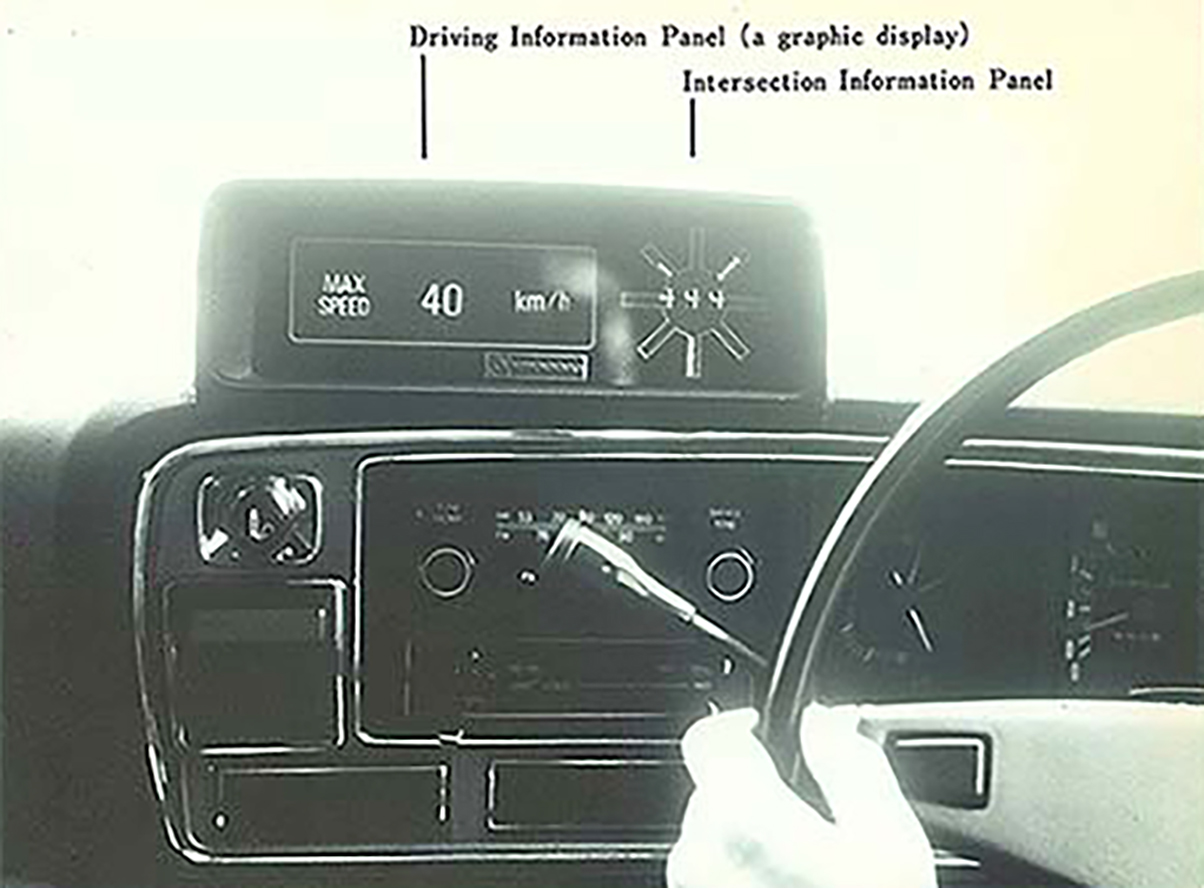
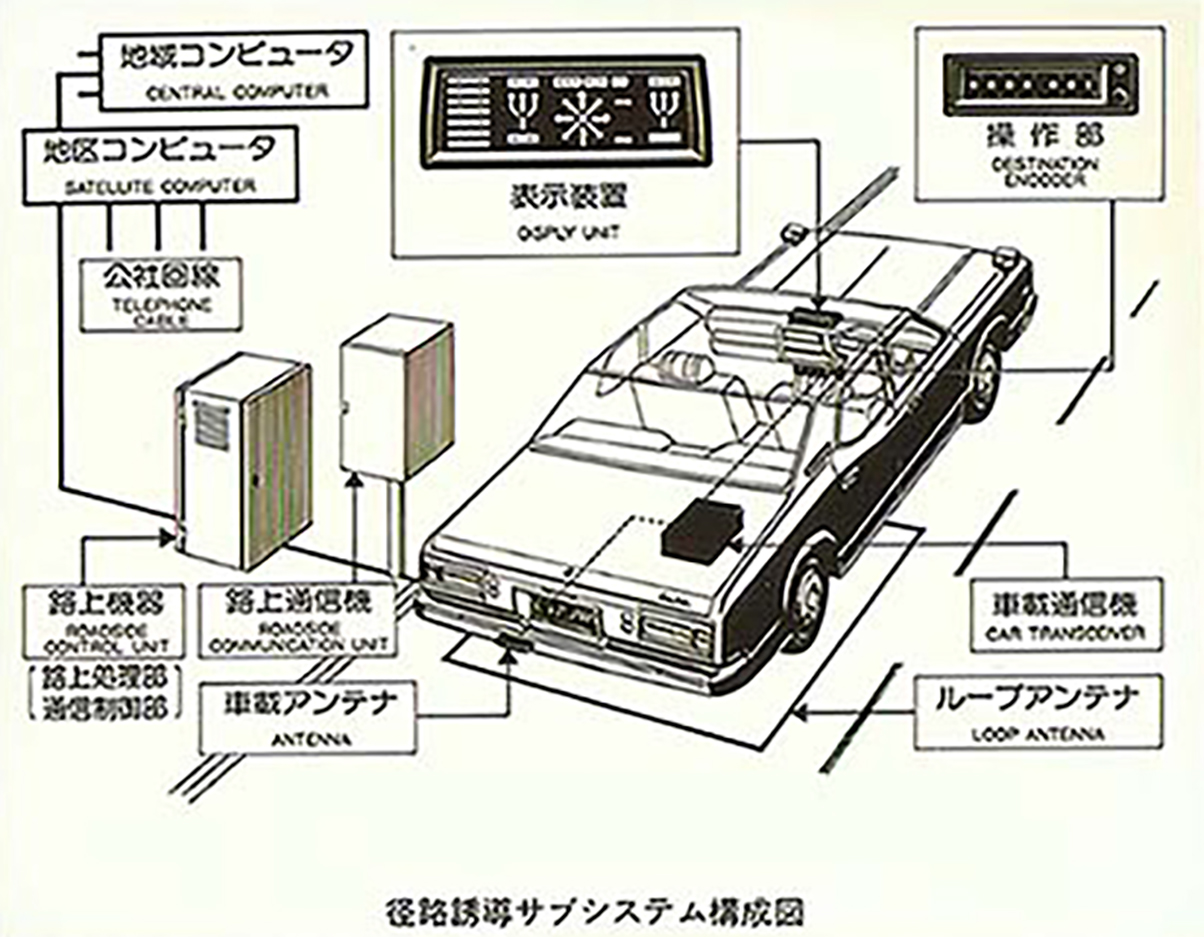
In Japan, the Ministry of International Trade and Industry (now the Ministry of Economy, Trade, and Industry) began developing a route guidance system in 1973. This system, known as the “Comprehensive Automobile Traffic Control System (CACS),” marked the start of ITS in Japan.
Prior to this, Toyota Motor Corporation had already started applying information and communication technology to improve automotive traffic, and our company was collaborating in this effort. Due to this background, we participated in the CACS project from its inception, alongside Toyota Motor Corporation. Our company was responsible for developing in-vehicle devices, roadside equipment, and vehicle-to-roadside communication systems, contributing with our expertise in electronics and communication technology.
Over time, Japan's ITS saw the collaboration of five related ministries in 1996 to formulate an overall concept. This plan identified nine key focus areas, with the foremost being the “Car Navigation System,” which was already leading in ITS development.
- Deep DiveJapan's ITS Concept
- The Intelligent Transport Systems (ITS) is an innovative transportation system designed to solve road traffic problems and create new industries by using cutting-edge information and communication technology to network people, roads, and vehicles with information. ITS aims to enhance safety, improve transport efficiency, increase comfort, and contribute to environmental improvement.
In 1996, five related ministries identified nine key development areas for ITS:
- (1) Advanced Navigation Systems
- (2) Electronic Toll Collection Systems (ETC)
- (3) Driver Safety Support Systems
- (4) Optimized Traffic Management
- (5) Efficient Road Management
- (6) Support for Public Transportation
- (7) Efficiency of Commercial Vehicles
- (8) Support for Pedestrians
- (9) Support for Emergency Vehicle Operations
Out of the nine key areas, our company is involved in the following five areas along with their respective products: (1)(Navigation), (2)(ETC), (3)(Automated Driving System, AHS/ASV), (7)(AVOS), and (9)(Emergency Notification Systems).
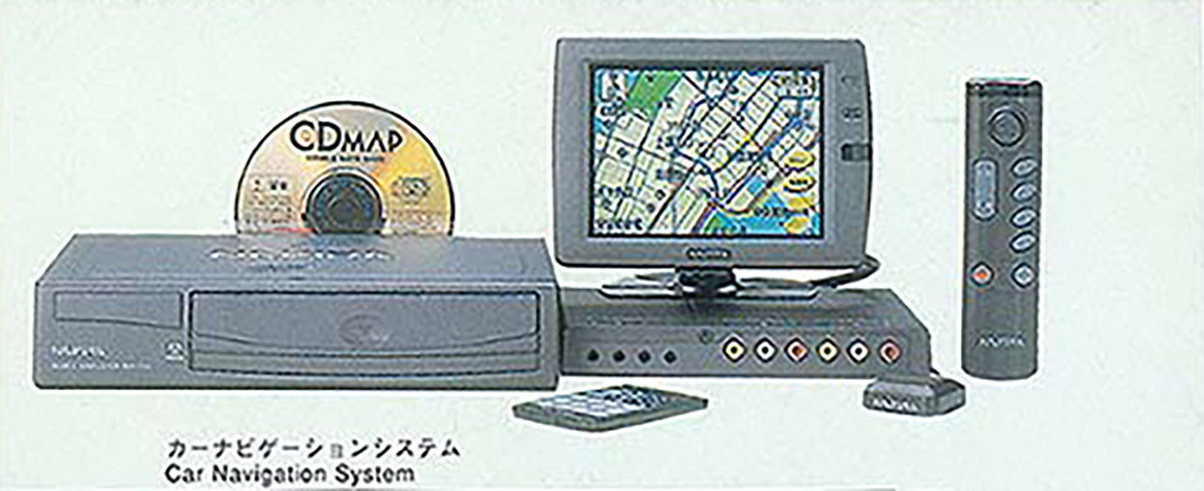
Japan's first car navigation system was the “Electro Multi-Vision System,” jointly developed by our company and Toyota Motor Corporation, and was installed in the “Crown” in 1987. Entering the 1990s, we enhanced the system by adding route guidance functions to the traditional map display and improving the accuracy of vehicle position calculation using GPS (Global Positioning System) technology. The significant improvements in performance and cost reduction led to the widespread adoption of car navigation systems from the late 1990s.
- Deep DiveEvolution of Car Navigation Systems
- Entering the 1990s, the “Vehicle Information and Communication System (VICS)” emerged as an integrated system incorporating car navigation. VICS provided individual car navigation systems with information on traffic congestion and other data.
In terms of functionality, the 1991 model added route guidance to the map display and improved the accuracy of vehicle position calculation using map matching and GPS technology. Additionally, voice guidance was introduced, completing the basic functions of car navigation systems.
By the 1996 model, the system had evolved to support VICS, ushering in the era of “connected car navigation.” Subsequently, features such as voice command and destination input, easy-to-read 3D map displays, and internet connectivity were implemented, advancing the multimedia capabilities of car navigation systems.
The “Electronic Toll Collection System” was also identified as an important area in the 1996 ITS overall concept. This system not only improved the convenience of toll payments but also contributed to environmental conservation by reducing traffic congestion and, consequently, emissions.
In 1995, our company began developing this system in collaboration with the Ministry of Construction (now the Ministry of Land, Infrastructure, Transport, and Tourism), and in 2001, the “Electronic Toll Collection System (ETC)” was officially launched. The proliferation of ETC subsequently became a catalyst for the full-scale implementation of vehicle-to-roadside communication.
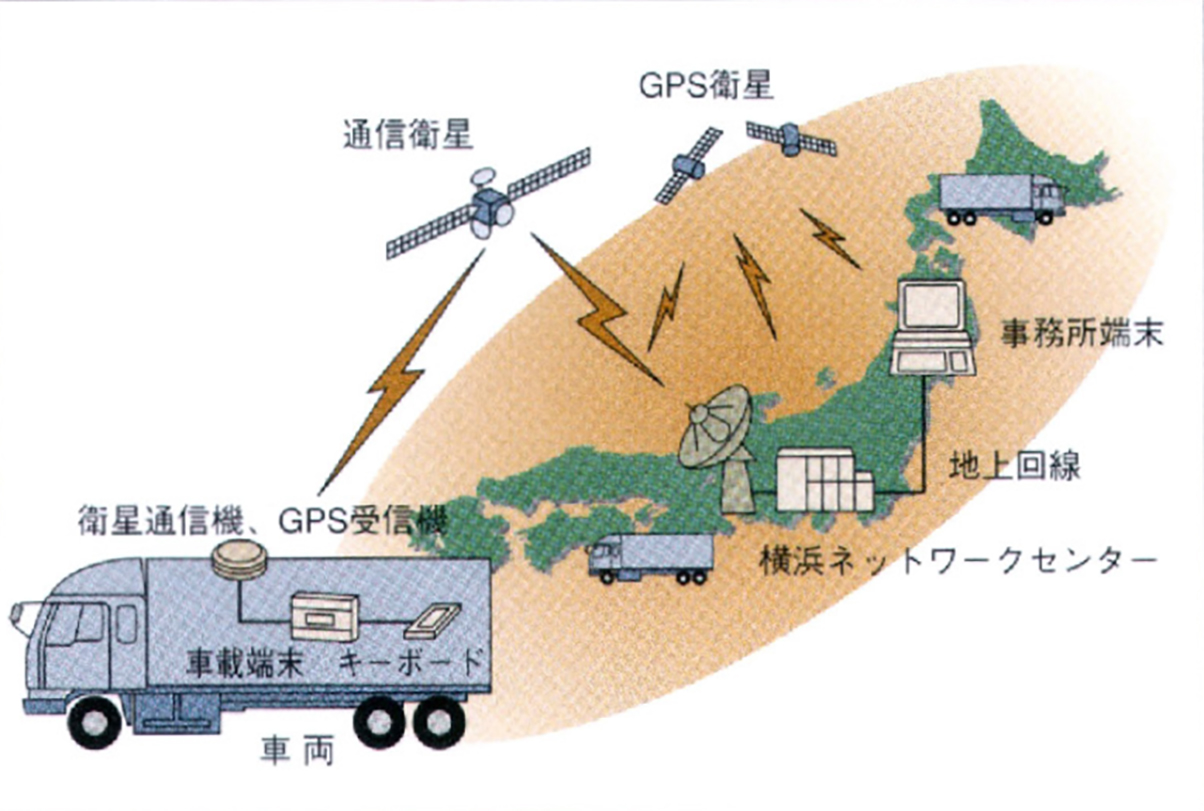
In the realm of supply chain management, our company pioneered the practical application of ITS for logistics in Japan with the “Advanced Vehicle Operation System (AVOS)” in 1995. AVOS utilized GPS location information to enable real-time communication with moving transport trucks and other vehicles, creating an efficient system.
In 1996, we further evolved this system by commercializing an innovative vehicle operation management system utilizing satellite communication. These systems significantly contributed to the efficiency of logistics.