6. Expansion of Business Domains
1986-
(2) Proliferation of QR Codes
- 1994
- Our company, which had established a strong position with barcode reading devices, developed the groundbreaking “QR code.” This QR code became widely integrated into society, contributing to solving various social issues as an information infrastructure.
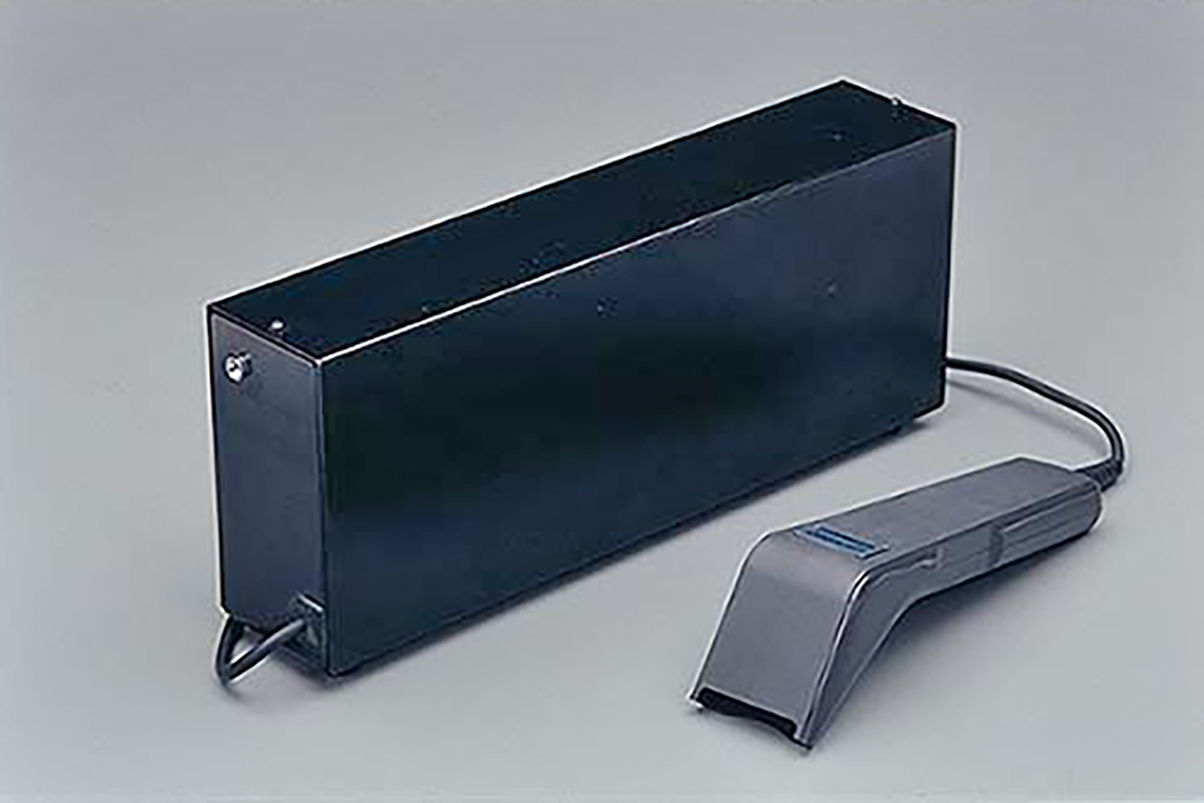
In 1975, we began developing barcode reading devices, marking the starting point of our automatic identification business, which later evolved into QR code-related ventures.
- Deep DiveBackground of Barcode Reader Development
- In the Toyota Production System, an important tool for information transmission is the “kanban.” The kanban contains information such as product names and part numbers related to individual items and serves as a tool for transmitting necessary information between production processes. However, with the surge in production volume in the 1970s, the manpower required to handle this information could not keep up, creating a situation where production process errors were likely to occur.
Our company believed that developing a system for the automatic recognition of kanban information would not only prevent human errors but also promote further informatization and contribute to process improvement. With this in mind, we embarked on the development of a system to barcode kanban information and the corresponding reading devices.
In 1982, we released our proprietary barcode reader “BHS-200,” which utilized an image sensor. This product captured a 90% market share in the convenience store industry. In 1987, we launched the world's first barcode handy terminal, “BHT-1,” which was adopted for in-car sales on Shinkansen trains and became well-integrated into society as an information infrastructure.
Entering the 1990s, the automotive industry shifted from mass production to an era of high-mix, low-volume production, significantly increasing information processing needs. At this point, the processing capacity of traditional barcodes had reached its limit.
Instead of extending the life of existing products, we decided to challenge ourselves with something entirely new and launched a project to develop a new code in 1992, starting with just two people. Despite the U.S. leading the way and other companies fiercely competing in development, our company pushed forward with the strong resolve to aim for a global standard.
After two years of trial and error, we completed a groundbreaking 2D code in 1994. Our new code boasted capabilities that surpassed others, offering more than ten times the reading speed of other 2D codes and storing tens to hundreds of times more information than traditional barcodes. We named this 2D code “QR (Quick Response) Code.”
- Deep DiveDevelopment of the QR Code
- In the United States, which was ahead in the research of 2D codes, various codes had been devised, but they had the drawback of taking a long time to read. Our new code development team saw ample room to enter this field.
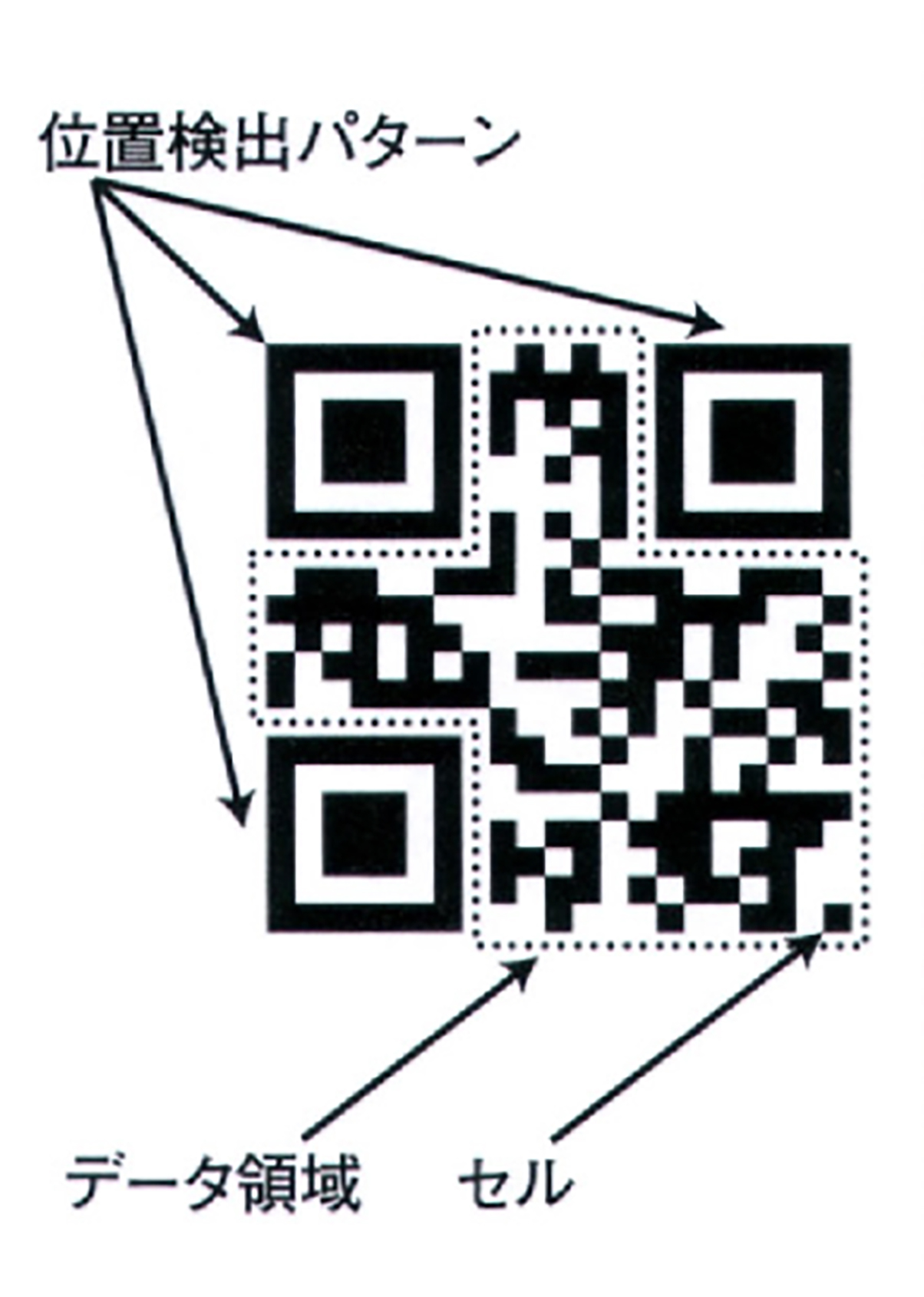
As a key differentiator, we set the must-achieve goal of creating a code that could be read quickly and easily. However, this was not a problem that could be solved with existing technology. While struggling to find a breakthrough, one of the team members was inspired by the cityscape of buildings. From this, they came up with the unique “position detection patterns” of the QR code, which serve as visual markers. By placing these position detection patterns at three corners, it became possible to achieve speedy and highly accurate recognition.
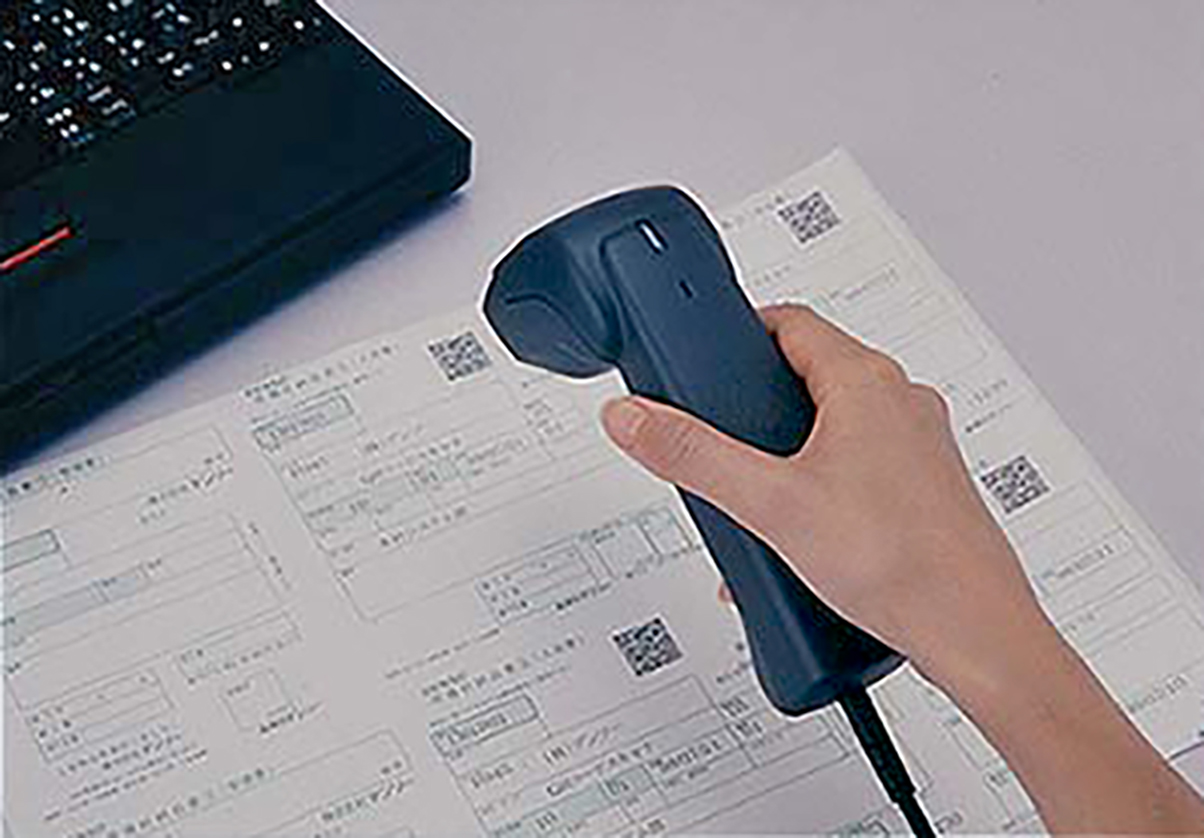
Due to the significantly increased information processing capacity, conventional reading technologies could not handle the new code. Consequently, we also began developing high-speed, high-precision QR code reading devices.
- Deep DiveDevelopment of QR Code Reading Devices
- The QR code was first adopted as a standard in the automotive and apparel industries and quickly spread throughout society.
In response to this rapid adoption, our company released the “QS10” series of handheld scanners in 1996, contributing to the advanced informatization of kanban systems. In 1997, we launched the “QHT-1000” handheld terminal, which played a significant role in food traceability. In 2003, we released the “QK10” scanner compatible with mobile QR codes, and in 2005, the ultra-compact color LCD handheld terminal “BHT-5000” was introduced to great acclaim.
Our handheld terminals have been pioneering products that opened up previously non-existent markets and have continually evolved to meet diverse needs.
Our ultimate goal was to establish a new global information infrastructure with the newly developed QR code. To widely disseminate QR codes, we adopted an “open strategy” and pursued “international standardization.”
For the “open strategy,” we decided to hold the patent for QR codes but not to enforce it. This allowed many companies to enter the QR code-related field, resulting in the emergence of diverse peripheral technologies and an expansion of usage methods and related markets beyond our expectations.
For “international standardization,” it was necessary for the QR code to be adopted as an international standard. This required clear definition and publication of specifications and adoption by application standards of industry groups.
Our company began activities toward standardization in 1996, resulting in the adoption of QR code standards by several industry groups. Further, in 2000, our goal was achieved when the QR code was adopted as an international standard by ISO/IEC (International Organization for Standardization/International Electrotechnical Commission).
Since then, QR codes and reading devices have continued to evolve. The adoption of QR codes has spread across various industries for diverse applications, including food safety traceability, monitoring and protecting dementia patients, and passenger protection through station platform door systems. QR codes have become increasingly familiar and an indispensable part of society's information infrastructure.