6. Expansion of Business Domains
1986-
(3) Production Innovation through Robotics
- 1983
- Our company has been involved in the development of industrial robots since the 1960s. Despite numerous challenges, we launched the “Robot Practical Application Project” in 1983. Leveraging our extensive experience in internal use, we also ventured into external sales.
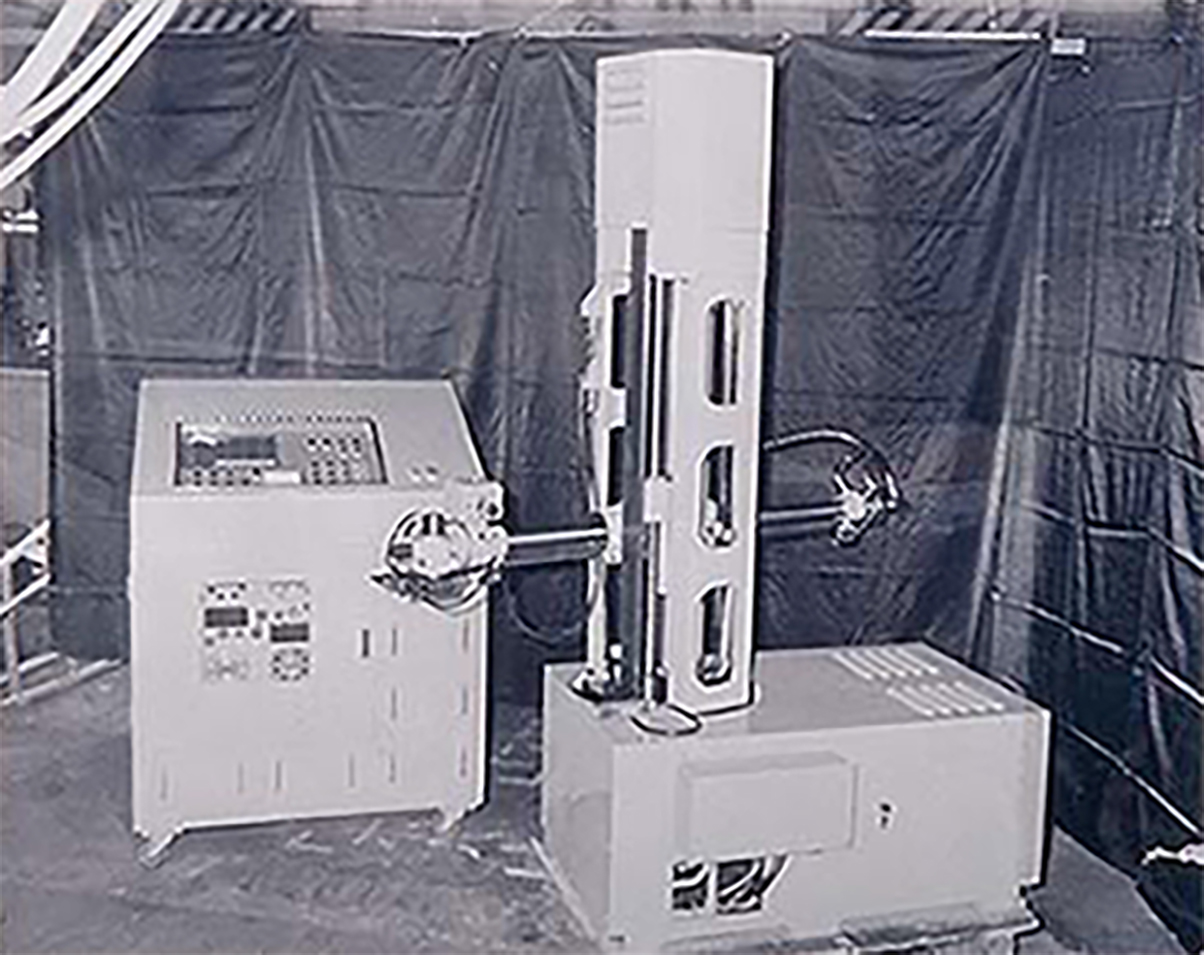
In the late 1960s, many domestic factories faced chronic labor shortages and long working hours, leading to deteriorating working conditions. Although we introduced transfer lines, they did not fully resolve the issues. More effective measures were needed, prompting us to focus on industrial robots.
In 1967, we initiated an industrial robot development project with a small team of three young engineers, aiming to create innovative robots using proprietary technology. By 1969, our first robot was completed, but it still had many malfunctions, leading to continuous improvements and innovations.
- Deep DiveFundamental Approach to Robot Development
- The vision of the executive in charge was to achieve a fully automated factory that operates 24 hours a day without human intervention. To pursue true automation, it was not sufficient to focus solely on robot technology; a comprehensive understanding of the products and manufacturing processes was essential, requiring a fundamental re-evaluation.
Robot engineers immersed themselves in the production sites, working closely with the production engineering personnel responsible for the processes. This collaborative and integrative approach has become the foundational stance for our company's robot development, persisting to this day.
In 1971, aiming for commercialization, we established the “Robot Preparation Department,” gathering young employees in their twenties and focusing on freeing workers from poor working conditions. Our first implementation was in the die-casting process at the Anjo Plant, and we also prepared for external sales.
However, the 1973 oil crisis caused a significant drop in production and capital investment in the automotive industry, forcing us to pivot from external sales to internal assembly line automation and dissolve the Robot Preparation Department. Nevertheless, robot-related technology research continued within our production engineering activities.
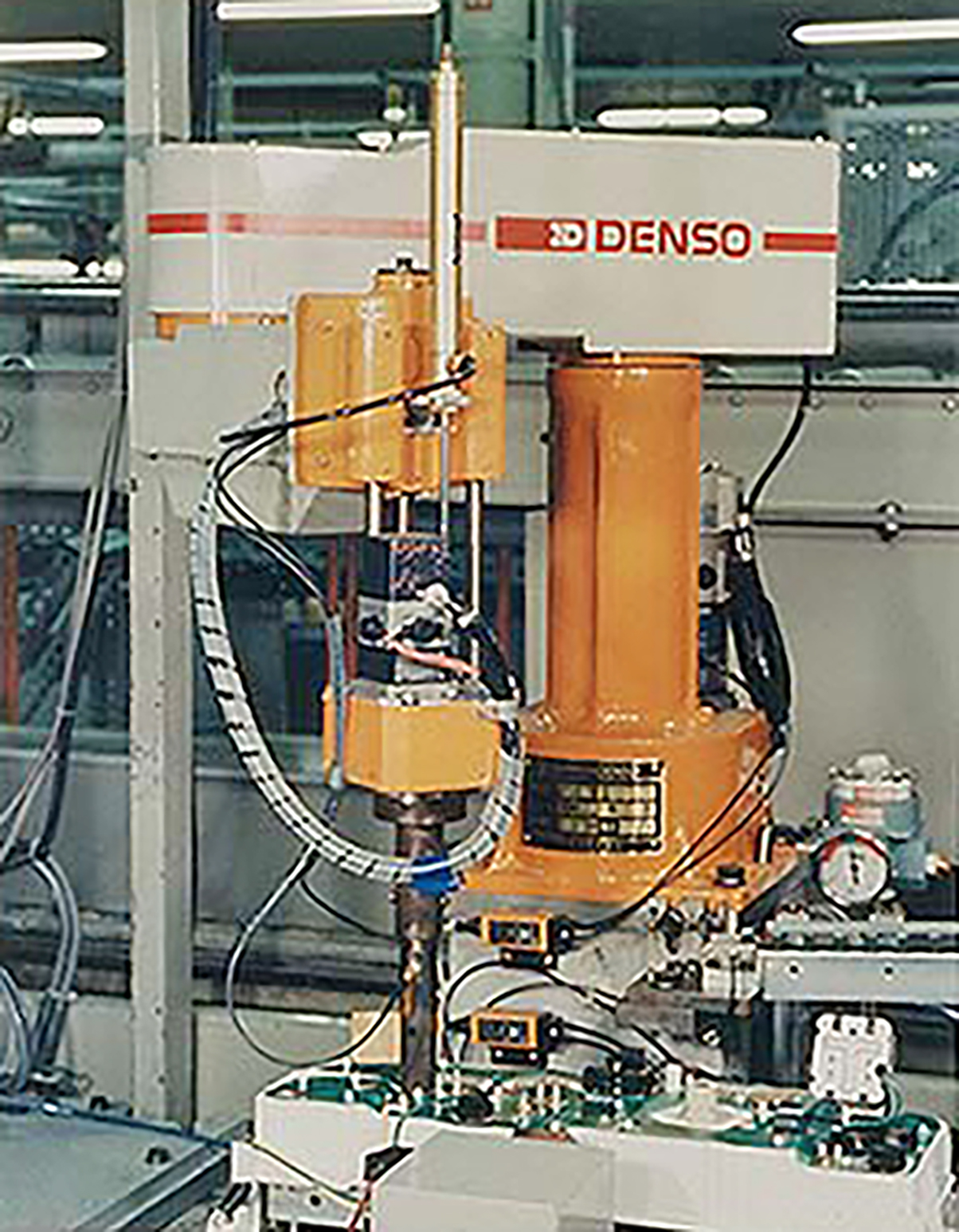
As the economy recovered in the early 1980s, securing labor again became a major issue. Our approach to robot development shifted, recognizing that automating labor-intensive assembly tasks was a key role for robots.
Anticipating future needs, we launched the “Robot Practical Application Project” in 1983, aiming to develop high-speed assembly robots for mass production. We needed to implement robots not only in large-scale but also in small and medium-sized production lines. Therefore, this project included participation from various production-related departments, forming a company-wide initiative.
The Robot Practical Application Project involved creating robot application plans for each manufacturing department, identifying necessary technologies and challenges. Based on this, we broadly engaged in “personnel training,” “development of manufacturing technologies,” and “cost reduction of equipment.” Additionally, we introduced a new metric, the “robotization rate,” to set numerical targets for expanding robot implementation.
- Deep DiveExpansion of the Robot Practical Application Project
- The first phase of this project was characterized by a top-down directive to “use robots no matter what.” This approach inevitably generated some friction and resistance, but through persistent efforts, it proved effective. By the final year of this phase in 1988, the number of robots introduced exceeded 1,000 units.
The second phase focused on “broader horizontal deployment,” aiming to expand the use of robots across more areas. By the final year of this phase in 1991, approximately 4,000 robots had been implemented.
In the third phase, the emphasis shifted to “building production systems with robots as a premise.” This strategic shift led to around 6,000 robots being introduced by 1995.
The fourth phase saw the annual introduction of over 1,000 robots, and by 1999, the cumulative number of robots installed had finally surpassed 10,000 units.
- Deep DiveTraining of Robot Personnel
- As the introduction of robots into manufacturing sites progressed, a consensus emerged among stakeholders that “the implementation of robots is inseparable from human resource development. It is essential to cultivate staff with accurate knowledge and insights.” Based on this understanding, our approach to robot development has fundamentally included the parallel training of highly skilled operators.
To ensure that more workers master robot operation skills, we established company-wide rules for safety education and certification in robot operation. We provided all workers with opportunities to receive training in robot operation skills, creating an environment where they could engage in program adjustments and quality improvements at the operational level. Moreover, we introduced “robot competitions” within our traditional skills competitions.
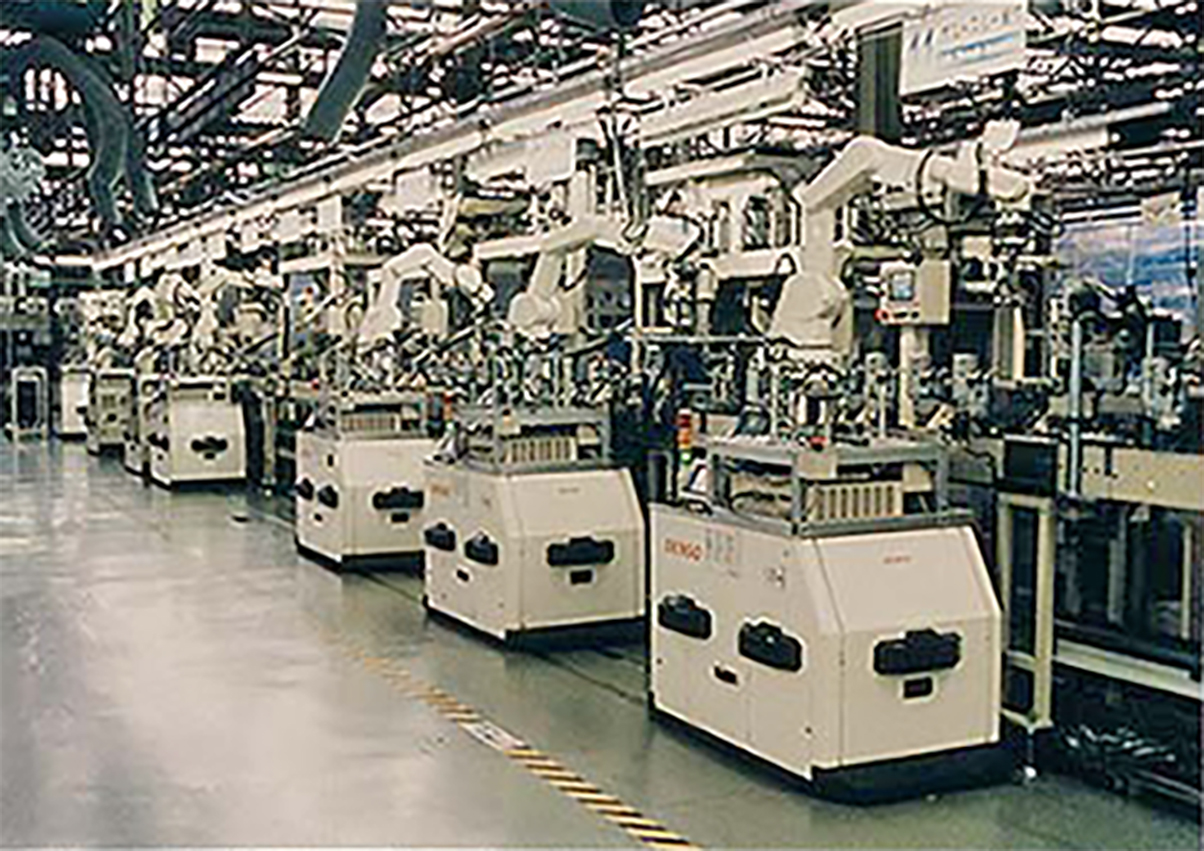
As robot practical application accelerated internally, demand grew within the Toyota Group for DENSO's high-performance robots. Responding to this, we established the “Robot Business Project Department” in 1991 and began external sales to the Toyota Group. By 1993, we started nationwide sales through authorized dealers, steadily building our business foundation.
While we had confidence in our products' track record and performance, we lacked sales know-how. To differentiate from competitors, we proposed “profitable robotization” from the customer's perspective.
Our greatest asset in this endeavor was our record of over 3,000 robots already in use within our company by 1991, providing us with unparalleled implementation experience and internal utilization know-how. Our unique and proactive sales activities received positive feedback, enhancing the reputation of DENSO's robots and solidifying our position in the market.